Contextual Modernism in Karak: A Study in Earth-Toned Massing
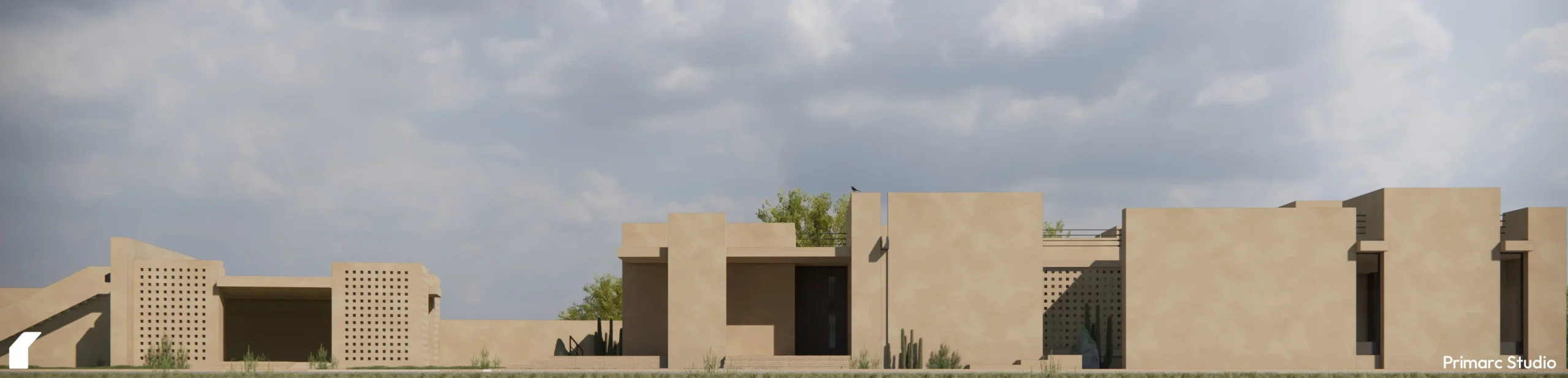
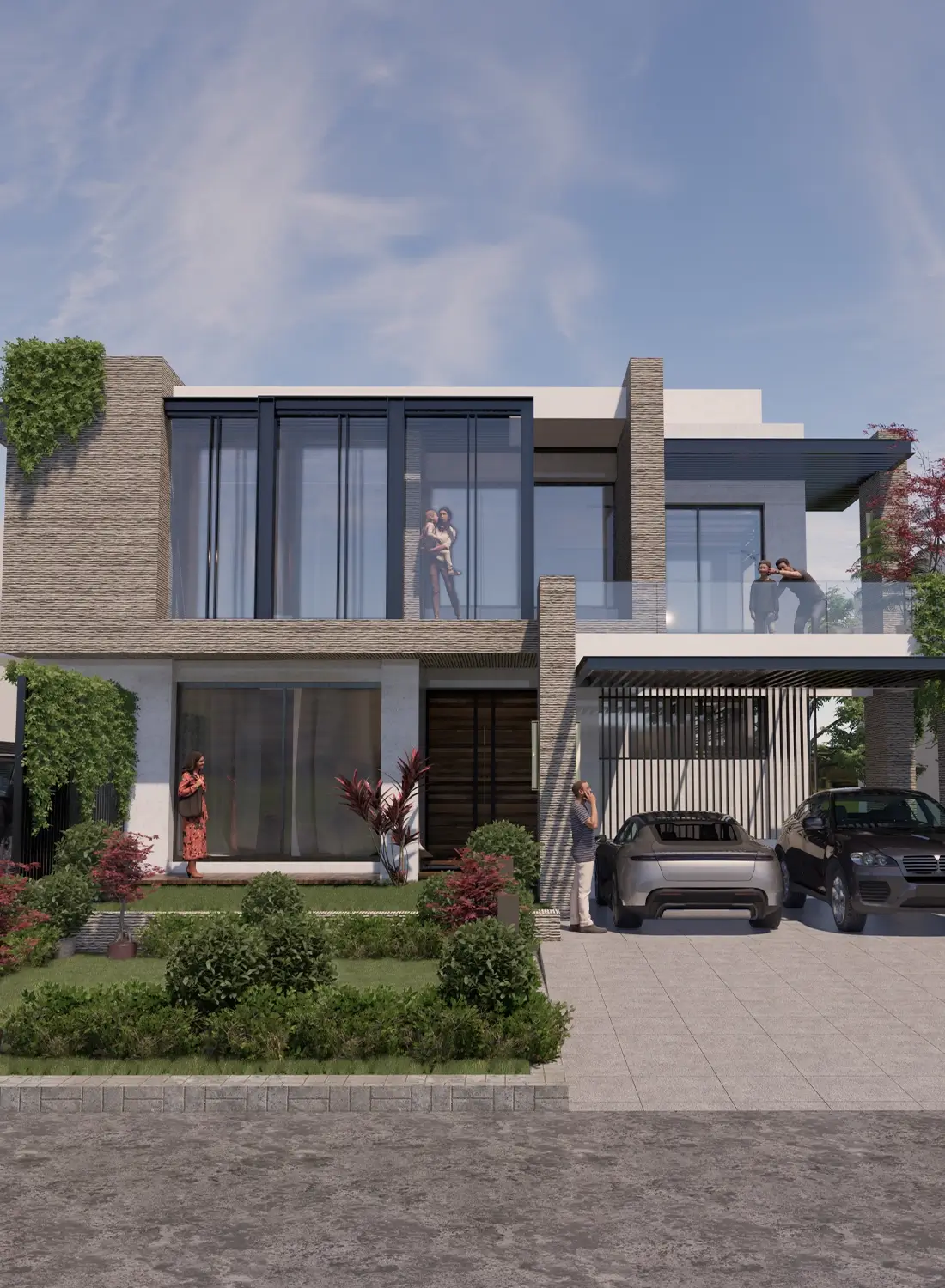
The Shahab House is an exercise in contextual restraint and volumetric clarity. Situated in the arid landscape of Karak, KPK, the design approach deliberately eschews vertical dominance in favor of a grounded, horizontal profile that engages intimately with the terrain.
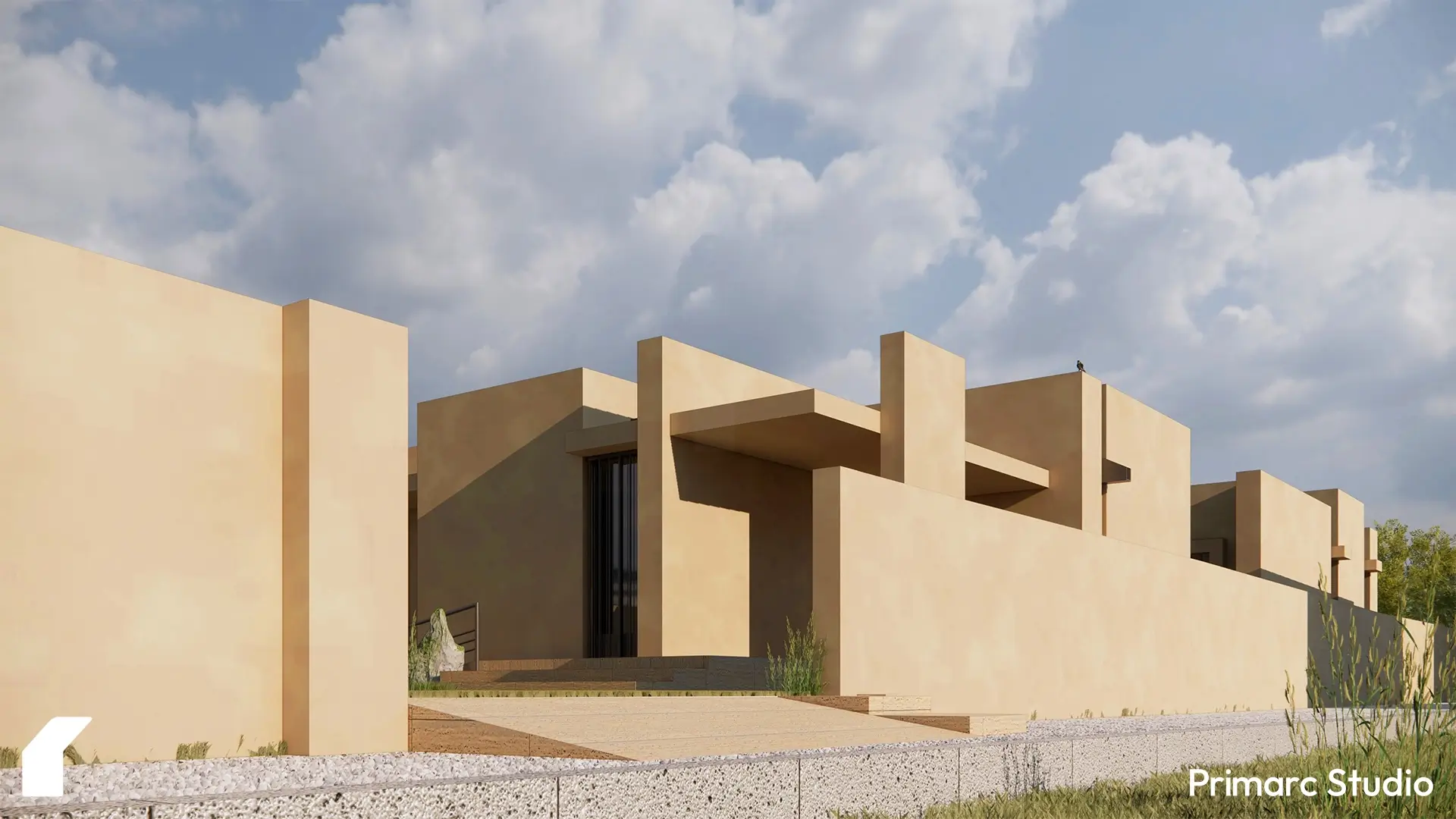
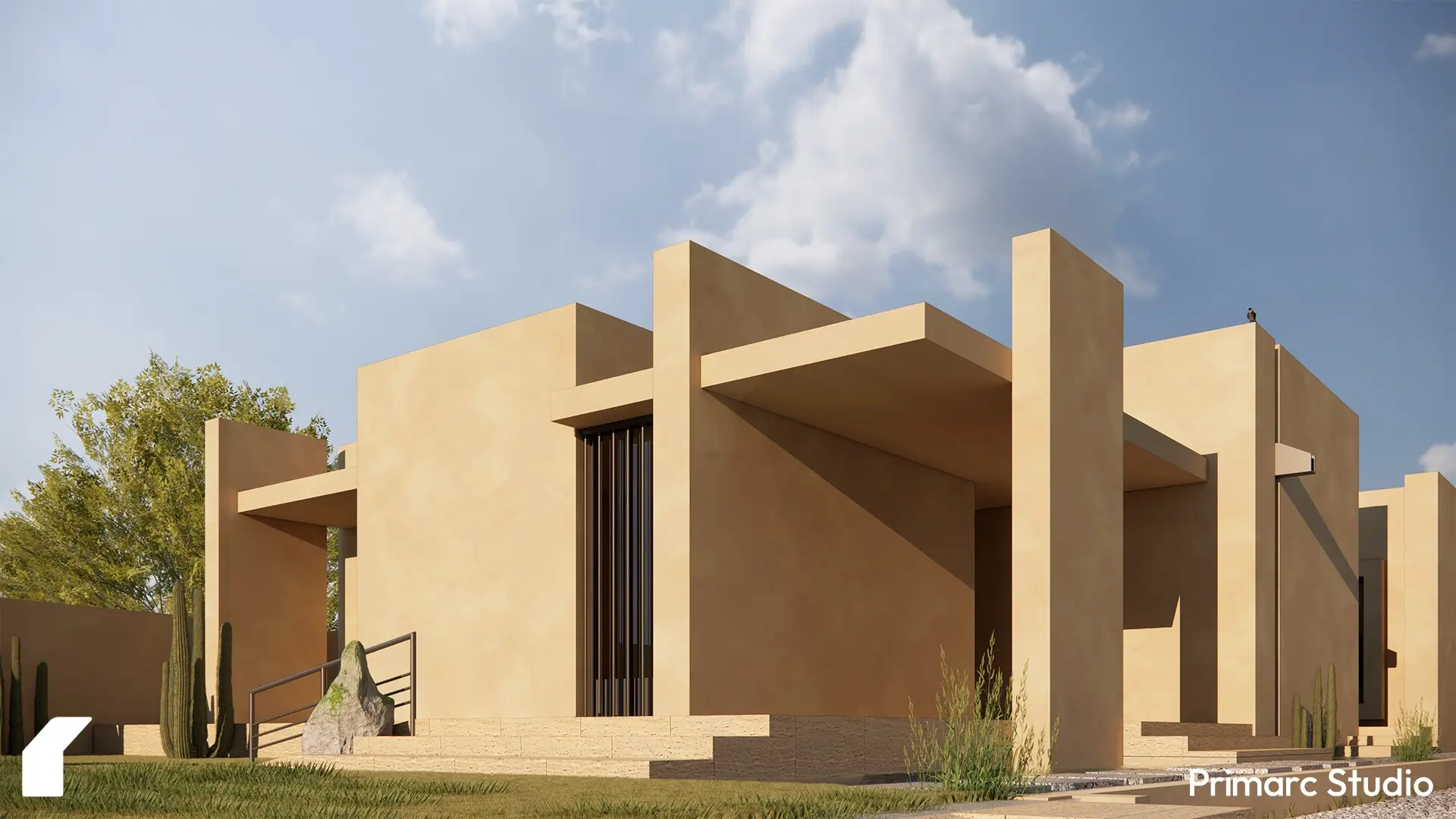
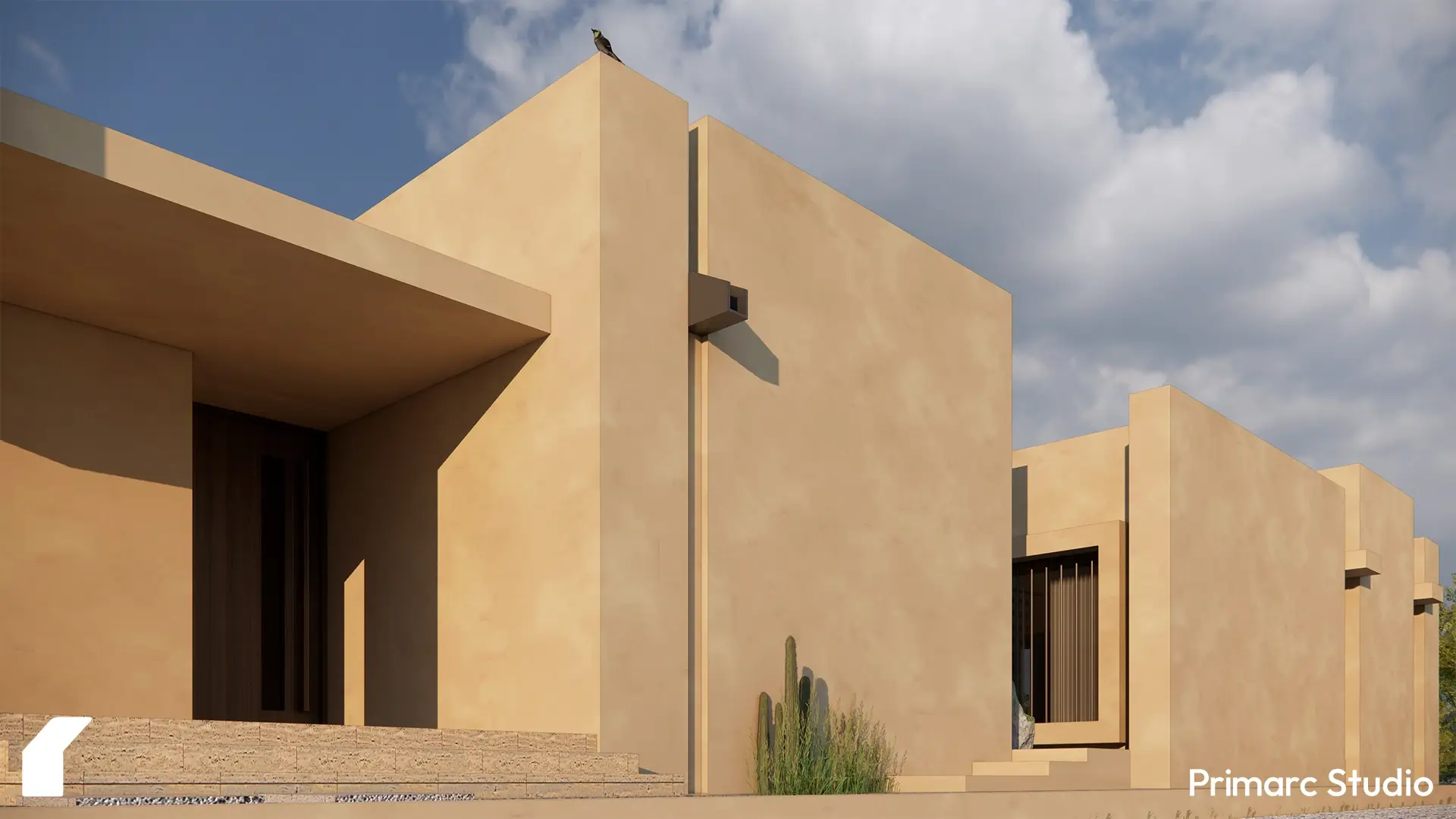
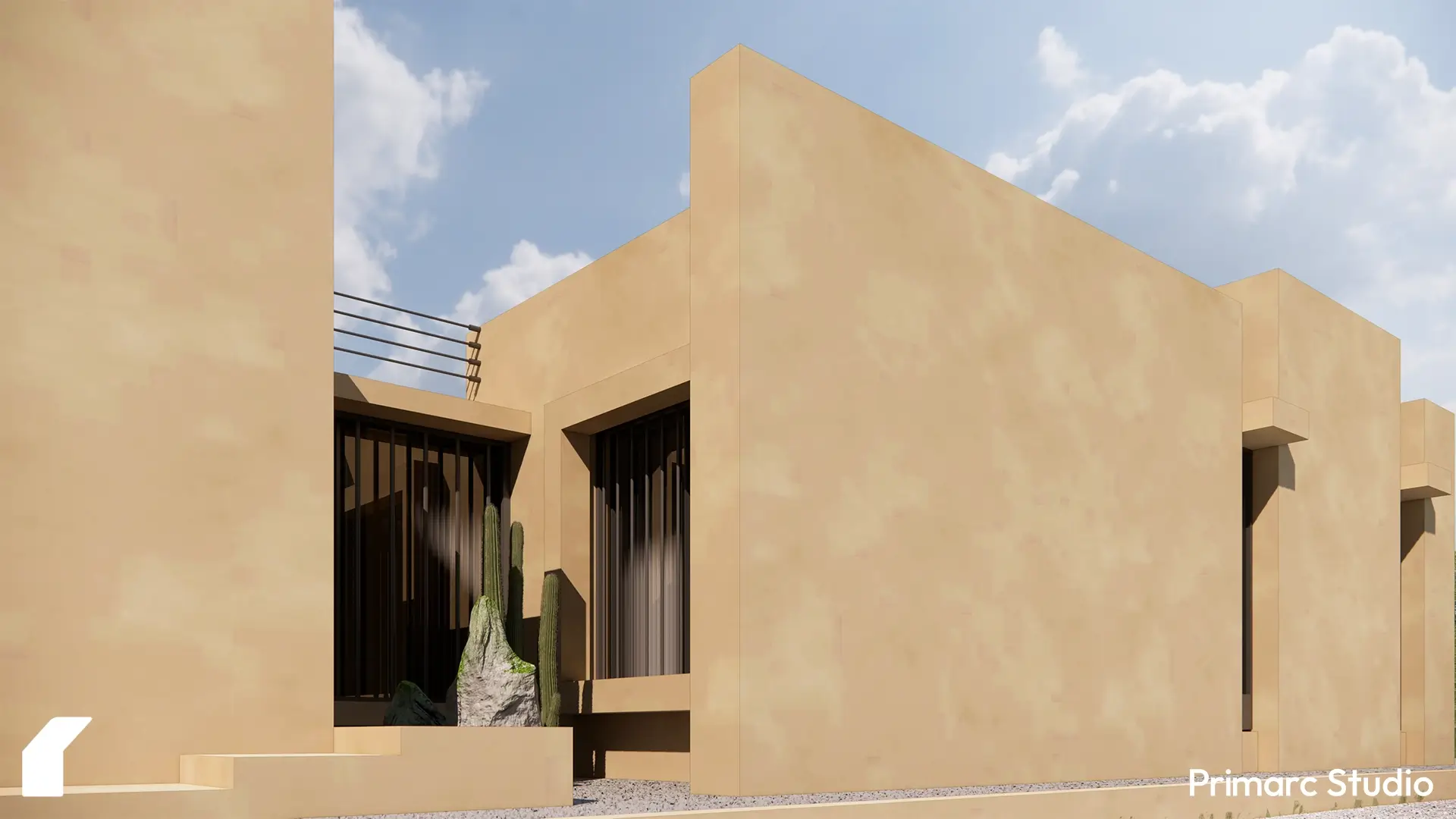
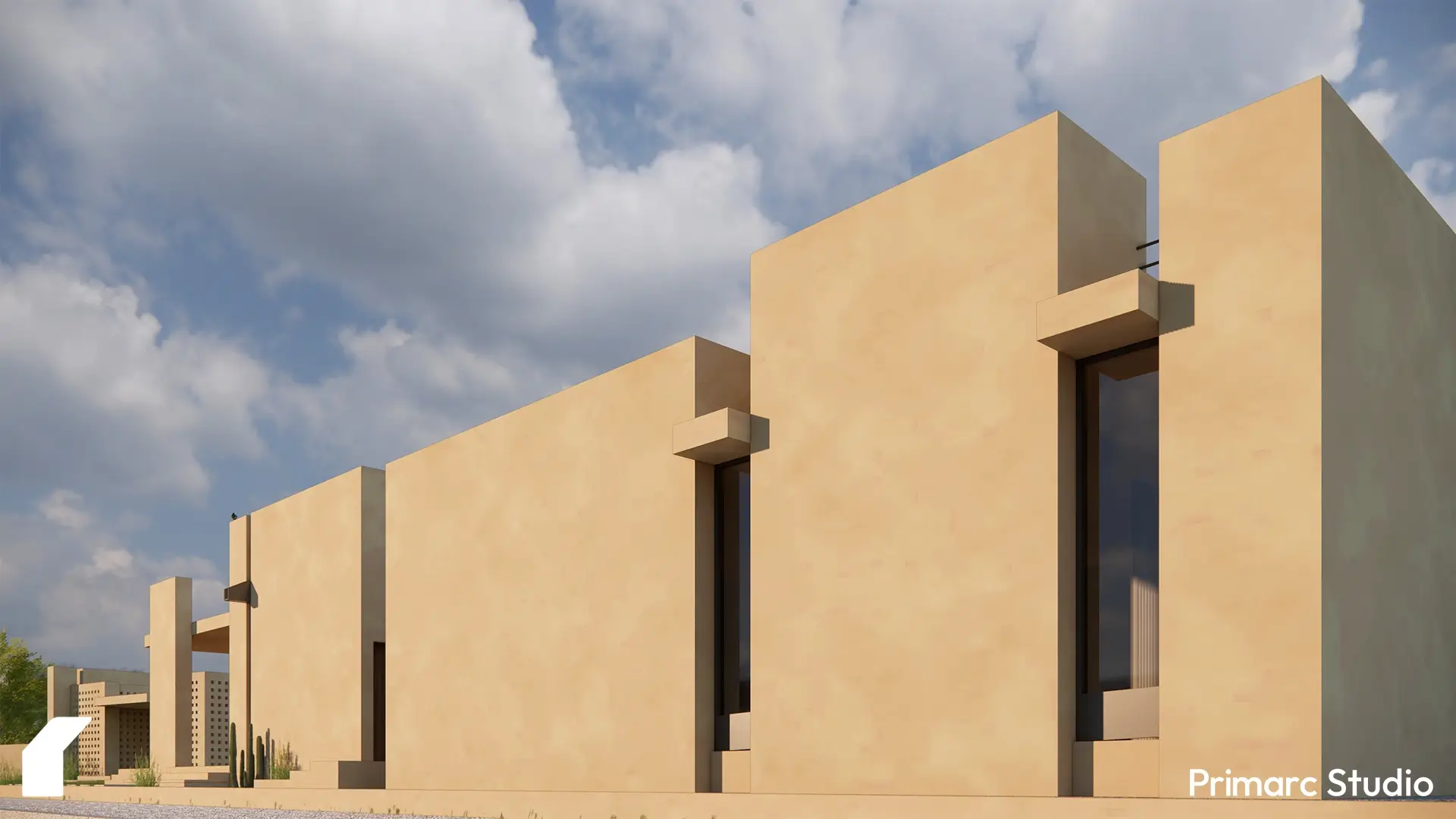
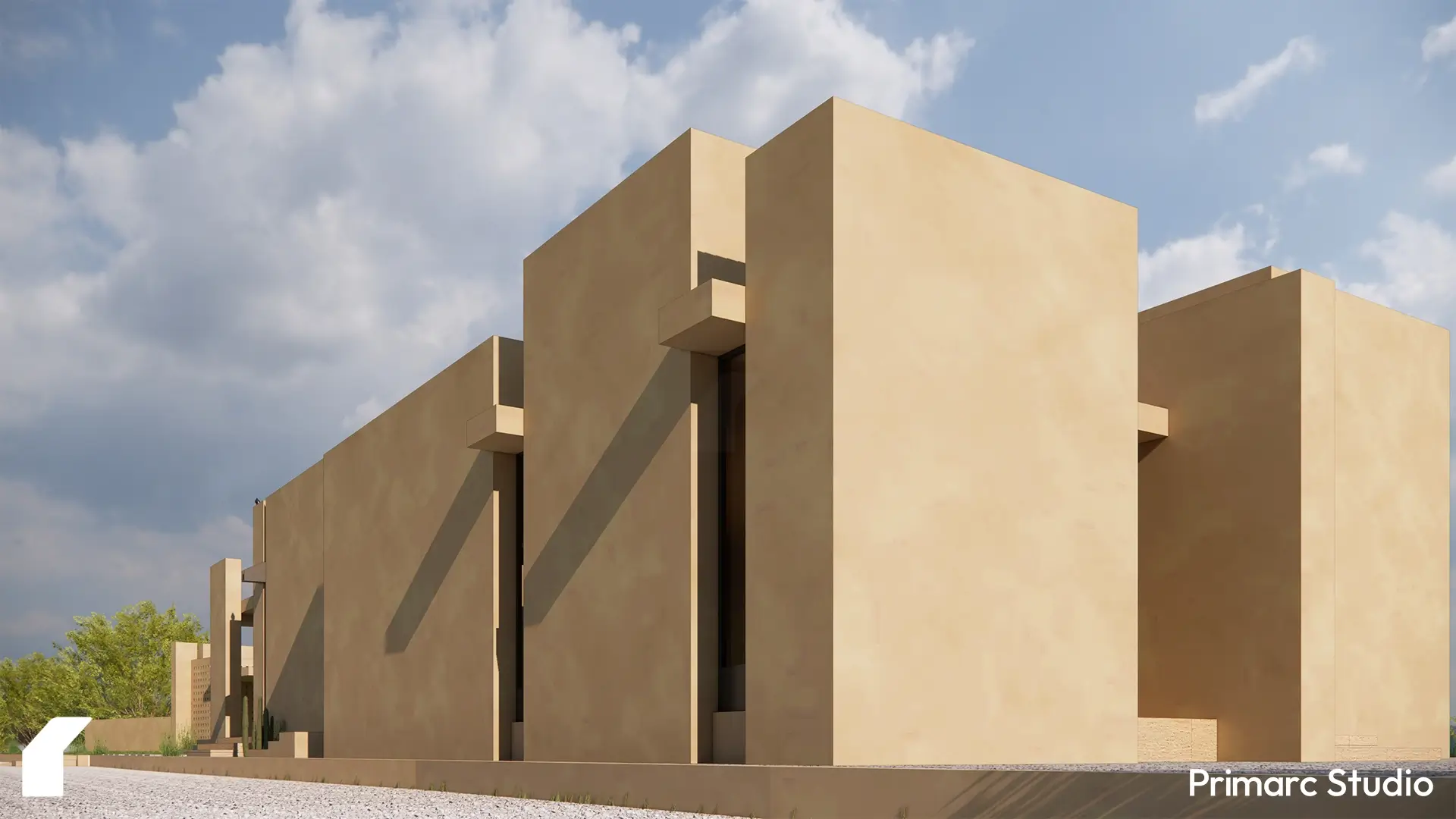
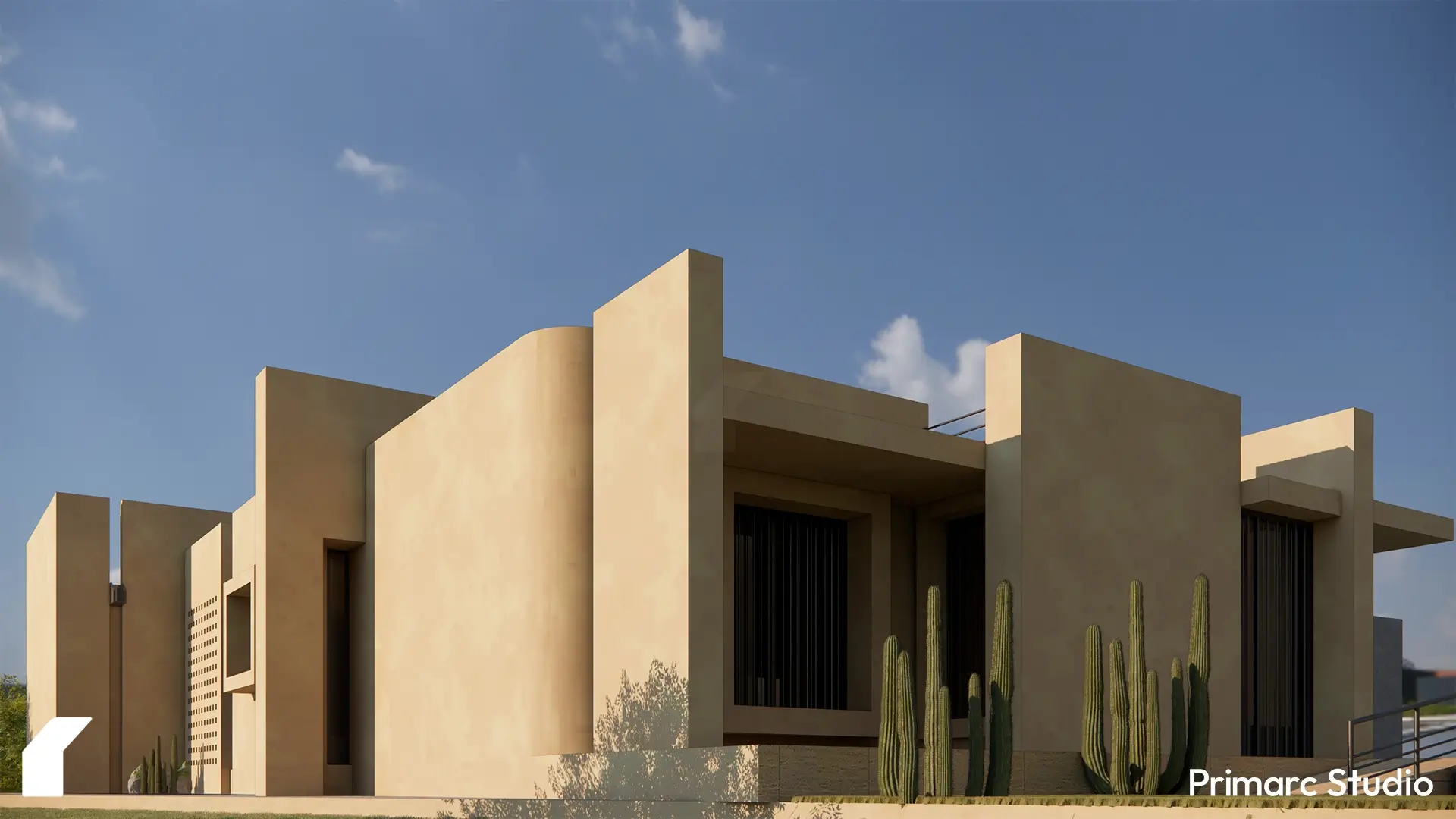
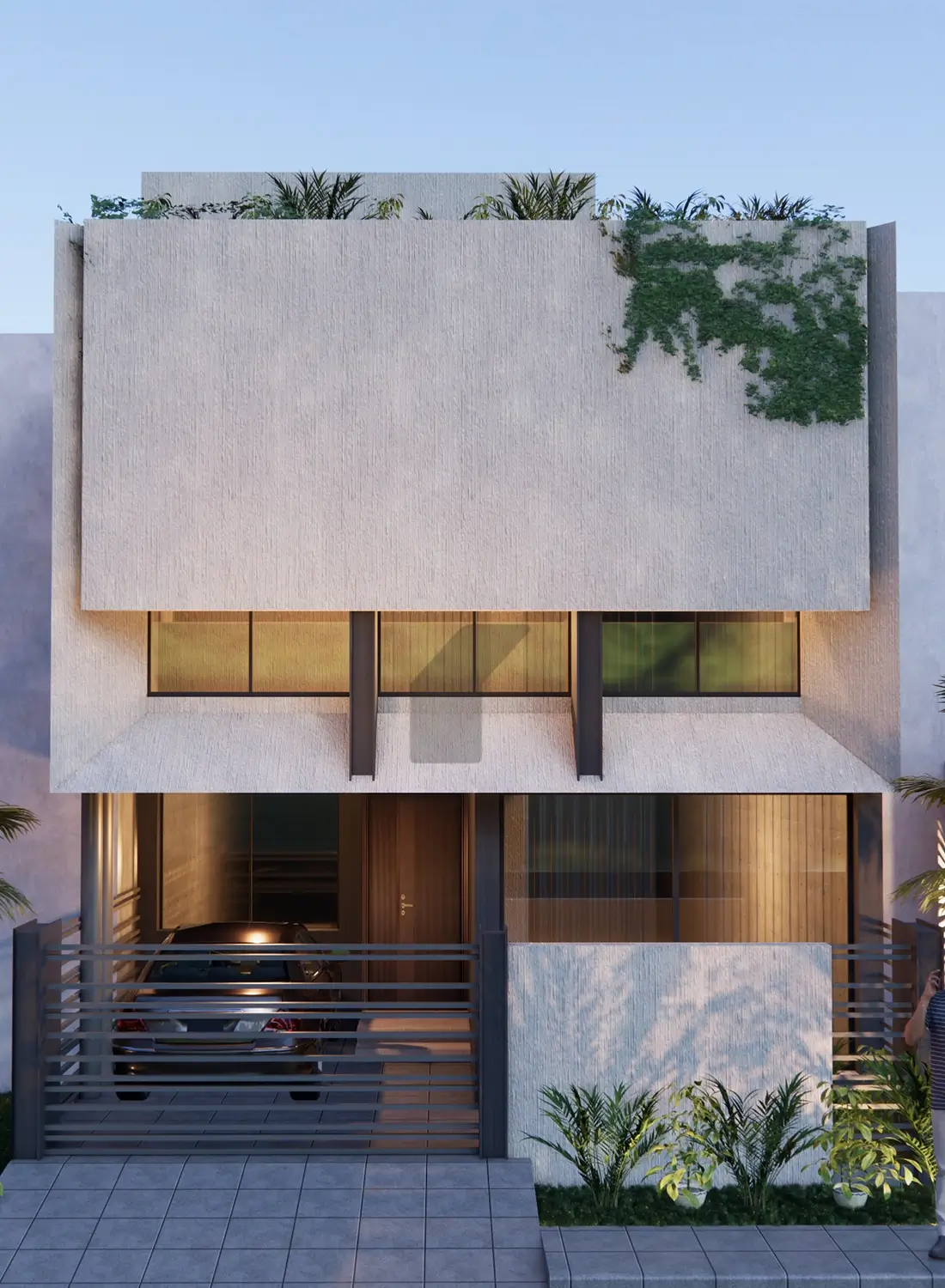
The architecture is defined by a series of intersecting rectilinear volumes. Rather than imposing a foreign aesthetic onto the site, the form is derived from a subtractive process carving out voids from a solid mass to create deep overhangs, shaded vestibules, and protected courtyards. This massing strategy not only breaks down the scale of the residence but serves a critical climatic function, generating self-shading elements that protect the glazing and interior spaces from the harsh southern sun.
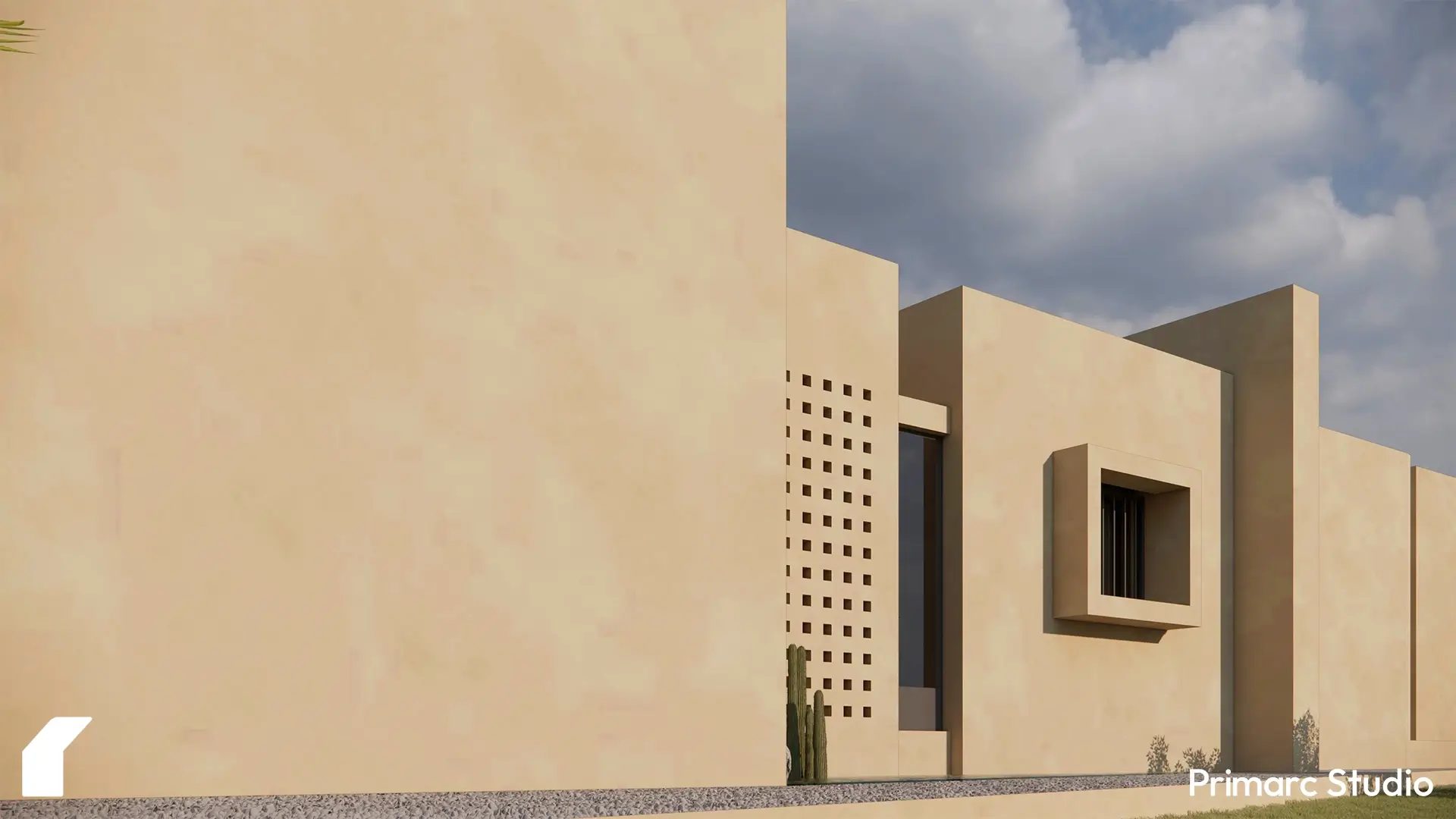
The visual language is monochromatic, utilizing an earth-toned textured finish that echoes the surrounding topography. By matching the built form to the color palette of the Karak soil, the house achieves a sense of permanence and belonging. The façade creates a dynamic play of light and shadow; the stark geometry captures the changing angle of the sun throughout the day, turning the structure itself into a canvas for shadow play.
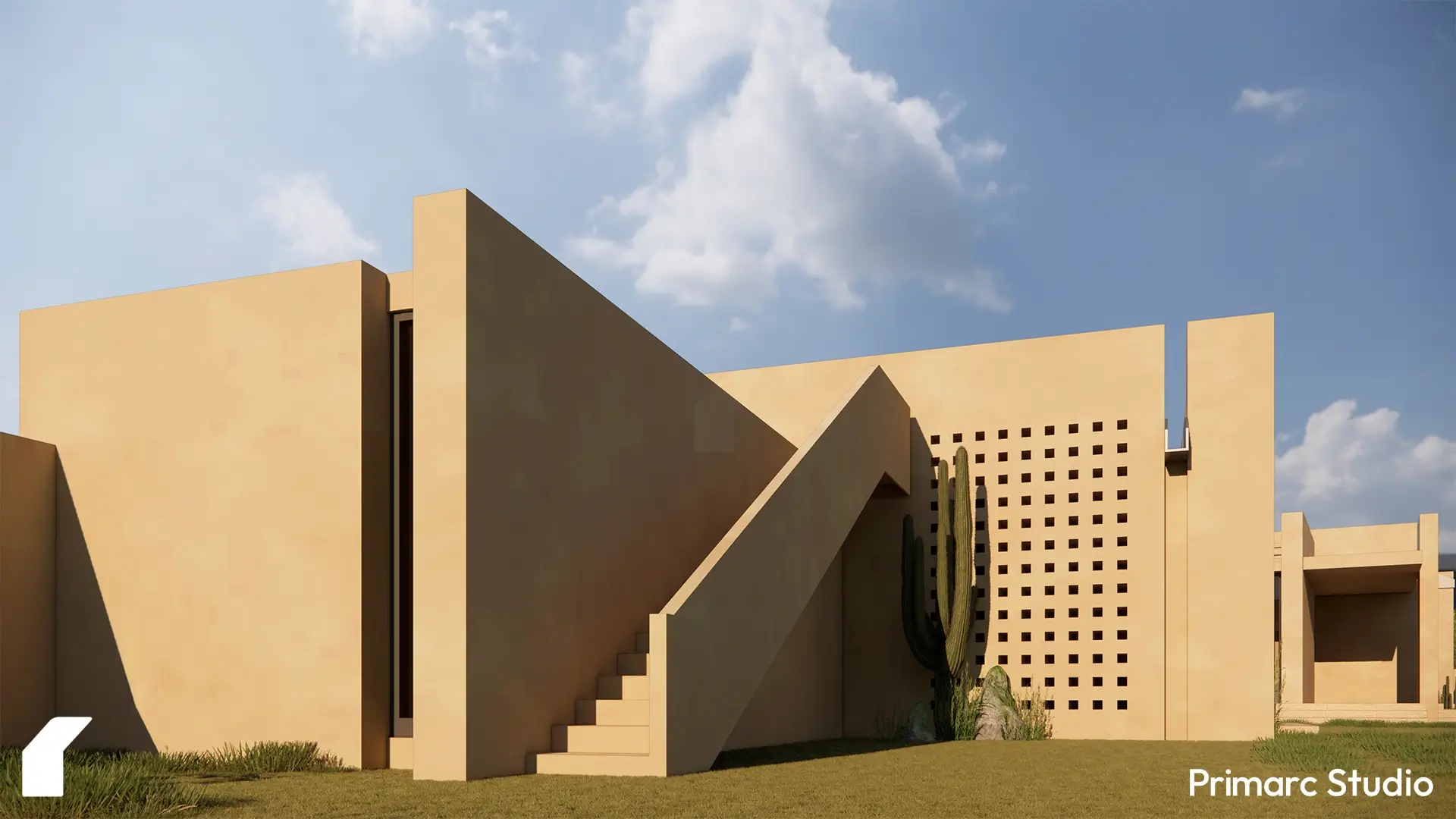
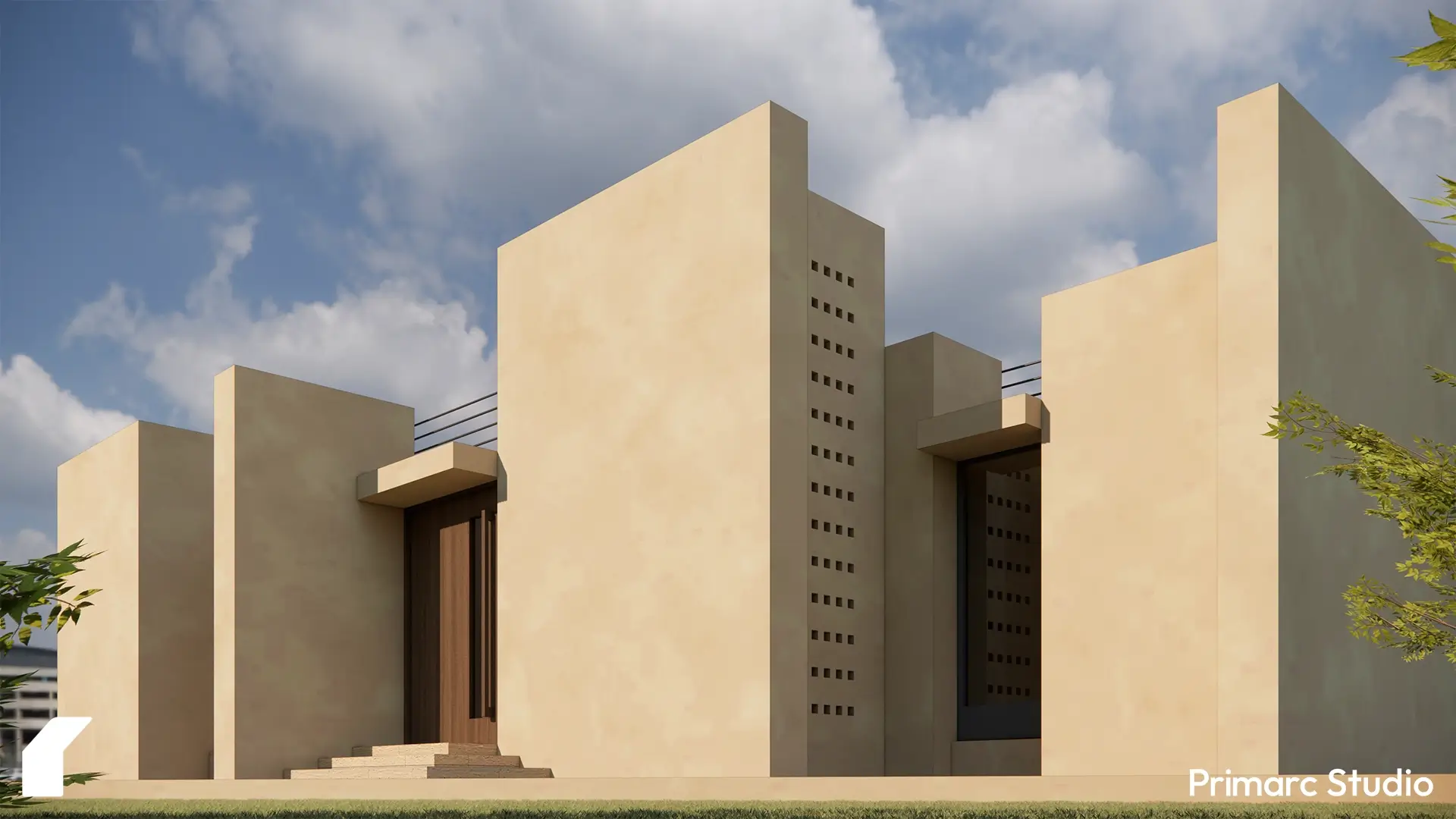
A key architectural feature is the integration of perforated screen walls (a modern reinterpretation of the vernacular jaali). These elements allow for passive ventilation and filtered daylight while maintaining privacy—a crucial requirement in the regional cultural context. The interplay between the solid, heavy walls and these porous screens creates a visual rhythm that lightens the overall massing.
The “Grounded” Philosophy
The residence is deliberately kept low-slung. The horizontal lines of the parapets and cantilevered slabs draw the eye across the landscape rather than upward. This “grounded” approach suggests a distinct humility in the design; the house is intended to be a sanctuary that sits within its environment rather than a monument sitting upon it. The landscaping, featuring local rock and drought-resistant flora (cacti), further anchors the structure, blurring the boundary between the built environment and the raw site.
In summary, the Shahab House is a response to the climate and culture of Karak, prioritizing thermal comfort, privacy, and architectural honesty over ornamentation.