Entering the world of commercial development in Pakistan is a high-stakes endeavor where the “site” and the “structure” are in a constant, intricate dance with regulatory authorities. Unlike residential projects, a commercial building is inextricably linked to its plot’s specific “affair” with local bylaws. At Primarc Studio, we believe that understanding the legal DNA of your plot is the first step toward a profitable investment.
In this guide, we break down the complexities of commercial approvals in 2026, from the “Holy Grail” of FAR calculations to the rigorous committee defenses required by authorities like the CDA, RDA, and LDA.
Understanding FAR: The Math of Your Investment
The most critical term any developer must master is FAR (Floor Area Ratio). Put simply, FAR dictates the total volume of construction allowed on your plot. It is the ratio of the total covered area of all floors to the total area of the plot.
For example, if your plot is 1,000 square feet and the FAR is 1:4, you are permitted a total covered area of 4,000 square feet across all floors.
The “Hidden” Square Footage: FAR Exclusions
One of the biggest advantages of working with an experienced studio is knowing what not to include in your FAR. In 2026, authorities allow specific areas to be excluded from this calculation, essentially giving you “free” usable space:
a- Corridors: Any corridor or circulation passage wider than 8 feet is generally excluded from the FAR. This allows us to design wide, airy, premium walkways that improve the building’s “wellness” without eating into your rentable square footage.
b- Parking Areas: Basements or dedicated floors for parking are not counted toward your FAR.
c- Service Cores: In many jurisdictions, specific vertical service shafts and lift lobbies have partial or full exclusions.
By strategically planning these excluded areas, we maximize the Usable Area of your building while staying strictly within legal limits.
Global Expertise: Navigating CDA, RDA, and LDA
Commercial development varies wildly depending on which side of the city line you stand on. At Primarc Studio, our footprint is wide, and we have developed a deep fluency in the specific “languages” of different authorities.
We have successfully navigated the complexities of:
a- Islamabad (Capital Development Authority)
The Capital Development Authority is known for the strictest zoning and green-space requirements in the country. In 2026, they have placed a high emphasis on the “New Blue Area” and environmental compliance, including mandatory rainwater harvesting for commercial plots.

b- Rawalpindi (Rawalpindi Development Authority / Defence Housing Authority / Bahria)
In the Rawalpindi jurisdiction, height limits and setbacks are heavily influenced by road width and neighborhood density. Navigating the intersection of RDA rules with society-specific bylaws (like those in DHA or Bahria Town) requires a highly coordinated approach to ensure your “Ground Coverage” is maximized without violation.

c- Lahore (Lahore Development Authority)
The Lahore Development Authority focuses intensely on high-density commercial use and traffic management. With Lahore’s rapid vertical growth, understanding the latest LDA regulations on high-rise commercial plazas is essential for any developer looking to capture the Punjab market.
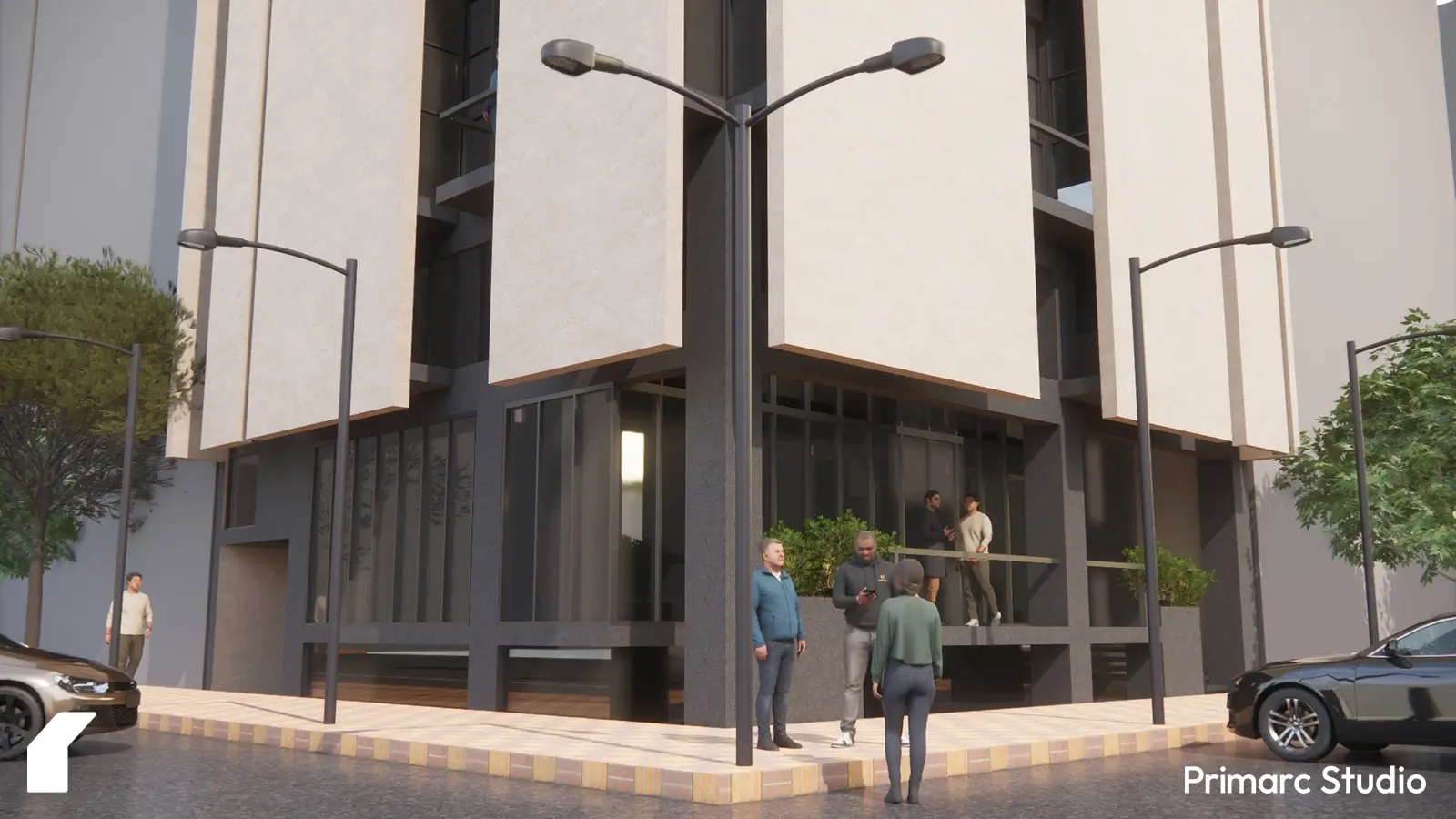
d- Peshawar (Peshawar Development Authority
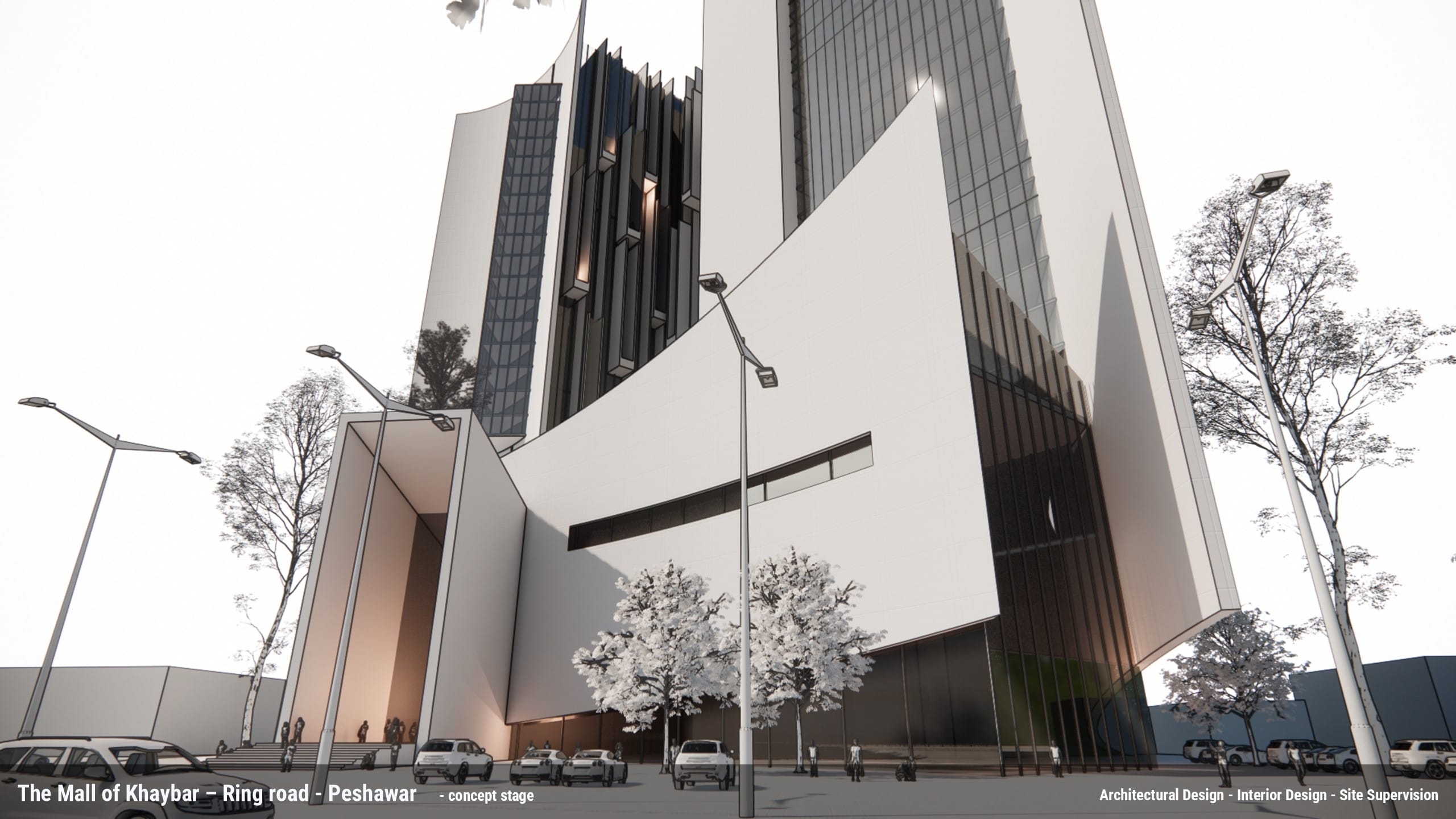
The Peshawar Development Authority has recently undergone a major shift. With the Peshawar Revitalization Plan and the 2024-2044 Master Plan, the PDA is now encouraging high-rise commercial developments (10+ stories) to preserve agricultural land. There is a unique focus here on urban beautification and facade cohesion, particularly for projects along major corridors like the GT Road.
Our Commercial Portfolio
We move beyond residential expertise into high-performance commercial assets. Our portfolio includes:
a- Hyper Ambition: A project where we balanced high-end retail demands with strict structural constraints.
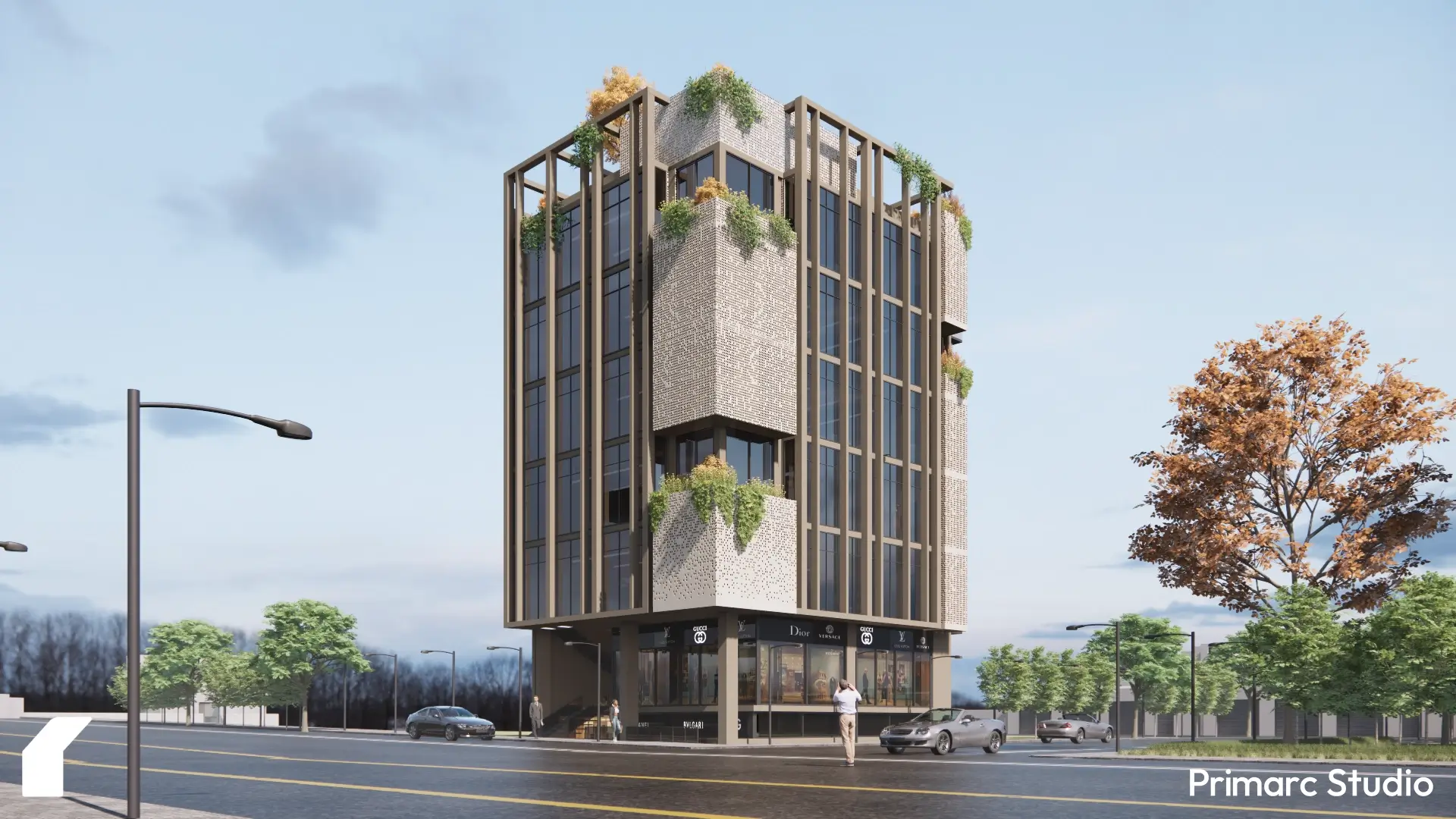
b- Islamabad Commercial Plaza: A landmark project where we optimized the FAR to provide maximum rental yield for our client.
c- Lahore Commercial Development: A current project where we are implementing advanced energy-saving facades in a high-density urban environment.
This “worldwide” perspective allows us to anticipate authority objections before they even happen.
The Technical Vetting: Structure & Safety
A major differentiator between residential and commercial projects is the Structure Vetting. For a house, structural drawings are often a formality; for a commercial plaza, they are a mandate.
Structural Vetting
In 2026, most commercial buildings—especially those exceeding a certain height or FAR—must undergo independent structural vetting. This ensures the building can withstand seismic activity (crucial in Zone 2B regions like Islamabad) and soil-specific stresses.
Integrated Firefighting Systems
Fire safety is not an “add-on” at Primarc Studio; it is integrated into the core architecture. Every project we undertake includes:
a- Fire Exits: Dedicated, pressurized fire exits on every floor and at every staircase.
b- System Integration: Automated sprinklers, smoke detectors, and fire alarms that are coordinated with the building’s electrical and water management systems (the “Dual-Tank” strategy mentioned in our Cost Guide).
The Primarc Roadmap: From Planning to Completion
The approval timeline is a structured journey. We guide our clients through each gate to ensure the project never stalls.
Phase 1: Planning & Client Approval
We start with the conceptual layout and the Exterior (Schematic) Design. Once the client approves the vision, we move into the technical “cleanup” in our studio.
Phase 2: Engineering Coordination
This is where many firms fail. We send our cleaned-up drawings to a specialized team of:
a- Structural Engineers
b- MEP (Mechanical, Electrical, Plumbing) Engineers
c- Firefighting Consultants
Phase 3: The Committee Defense
For certain high-rise or large-FAR commercial projects in CDA sectors, a “paper submission” is not enough. The design must be presented to a Review Committee. This is a rigorous process where the Architect and Structural Engineer must physically appear to defend the design. We are cross-questioned on everything from traffic impact to structural integrity. Primarc Studio assists the client through this entire defense, explaining the standards used and proving that the design is both safe and compliant.
Phase 4: Submission & NOCs
After committee approval, we submit the formal drawings along with all required NOCs (No Objection Certificates) from environmental, traffic, and fire authorities. Only then can construction legally begin.
Phase 5: Construction & The Completion Certificate
During construction, authority representatives visit the site to verify that the building matches the approved drawings. Once construction is finished, the owner must apply for a Completion Certificate. This is the final “seal of approval” that proves no violations occurred and all services are properly installed.

Common Mistakes: The Cost of Rushing
The most expensive mistake a developer can make is rushing into the approval stage without Coordinated Construction Drawings.
If your architectural drawings aren’t synchronized with your MEP and Structural plans before approval, you will encounter clashes on-site. Breaking a concrete beam because a drainage pipe was missed in the drawings is a massive financial burden. At Primarc Studio, we coordinate every detail in the studio to ensure that “what is approved is what is built.”
Pro-Developer FAQs
Question: Can I change my design after the map is approved?
Answer: Minor changes are possible, but significant structural or FAR changes require a “Revised Submission,” which can delay the project. It is always better to finalize the design during the coordination phase.
Question: Is a basement mandatory for 4-marla plots?
Answer: It depends on the society. While some mandate it for parking, others allow on-street parking for smaller footprints. We check the latest 2026 society-specific bylaws for you.
Question: How long does the CDA committee process take?
Answer: Generally, it can take 4 to 8 weeks, depending on the committee’s schedule and the complexity of the project defense.
Conclusion
Navigating commercial bylaws in Pakistan is not about finding “loopholes”; it is about masterfully using the rules to create a superior building. By understanding FAR exclusions, prioritizing structural vetting, and coordinating MEP from day one, you ensure your project is a financial success. At Primarc Studio, we don’t just get your map approved, we defend your vision and protect your investment.

Primarc Studio Architects
The Primarc Studio editorial team consists of architects and designers specializing in modern residential projects, interior designs and commercial designs across Pakistan. Together, we share insights on design trends, construction costs, and project case studies.