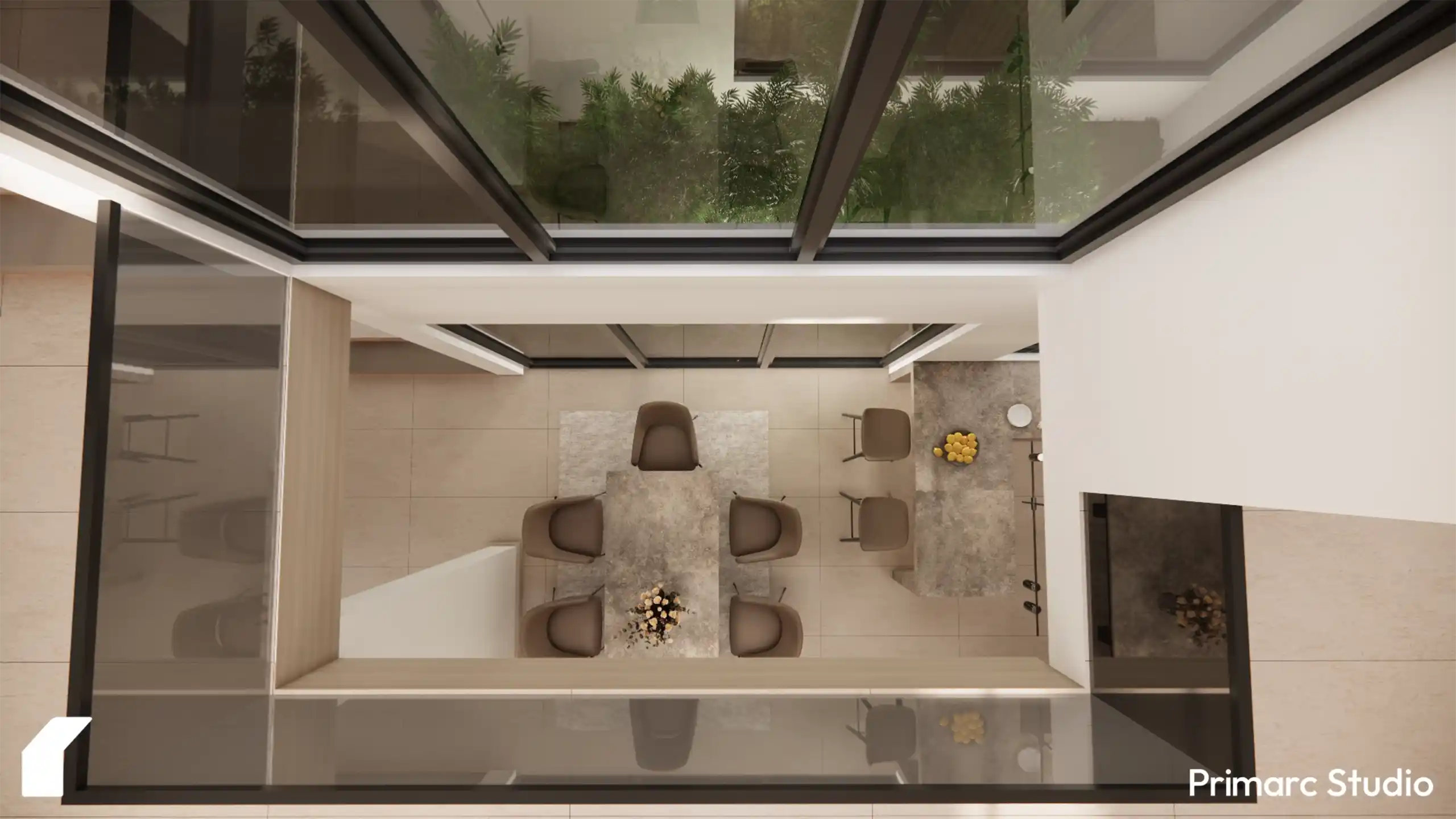
Climate responsive architecture is the practice of designing buildings that work in harmony with their local environment rather than relying solely on mechanical systems. Climate responsive design focuses on planning buildings that work with the environment instead of fighting against it. A well-designed house can reduce heat in summer, keep warmth in winter, and improve ventilation throughout the year.
For a home in Islamabad, this means the design must actively mitigate the intense summer heat while retaining warmth during the cold winter nights thus impacting the energy consumption. Because of this, houses in the city should not only look modern but also respond to the local climate.
At architecture firms such as Primarc Studio, we integrate these strategies during the earliest planning phases to ensure the building envelope itself using the walls, windows, and roof which do the heavy lifting for comfort.
Understanding Islamabad’s Climate
To design climate responsive homes, architects must first understand the local climate conditions of the city. Islamabad experiences four major seasons:
- The Summer Peak (): The primary challenge is protecting the interior from direct sunlight and heat gain.
- The Monsoon (July–September): Beyond just cooling, the architecture must handle high humidity and heavy rainfall through advanced drainage and roof design.
- The Winter Drop: Temperatures fall significantly at night, requiring the home to act as a thermal battery that retains heat.
- The Shoulder Seasons (Pleasant Spring and Autumn): These are the “golden hours” for architecture, where we can maximize natural ventilation and daylight to create a seamless indoor-outdoor experience.
Because of these conditions, house design in Islamabad must carefully consider sunlight, wind direction, insulation, and materials.
The Core Philosophy: “Passive First, Active Second”
Our approach is guided by a simple hierarchy: optimize the Passive Design (orientation, insulation, shading) before ever considering Active Systems (AC, heaters). A well-designed climate-responsive home in Islamabad can reduce its total energy load by up to 30-40%, providing a comfortable sanctuary even during the city’s frequent power outages.
Solar Orientation: The North-South Axis
The most effective “technology” in a climate-responsive home is its orientation. In Islamabad, the sun moves along a high southern arc during the summer and a lower southern arc in the winter. Mismanaging this relationship leads to “heat traps” that force air conditioning systems to work overtime.
The North-South Axis Strategy
Architects at Primarc Studio prioritize a North-South orientation for primary living spaces.
- The North & Northeast Advantage: We design major lounges and bedrooms to face North or Northeast. This provides consistent, soft daylight throughout the day without the direct “thermal punch” of the sun.
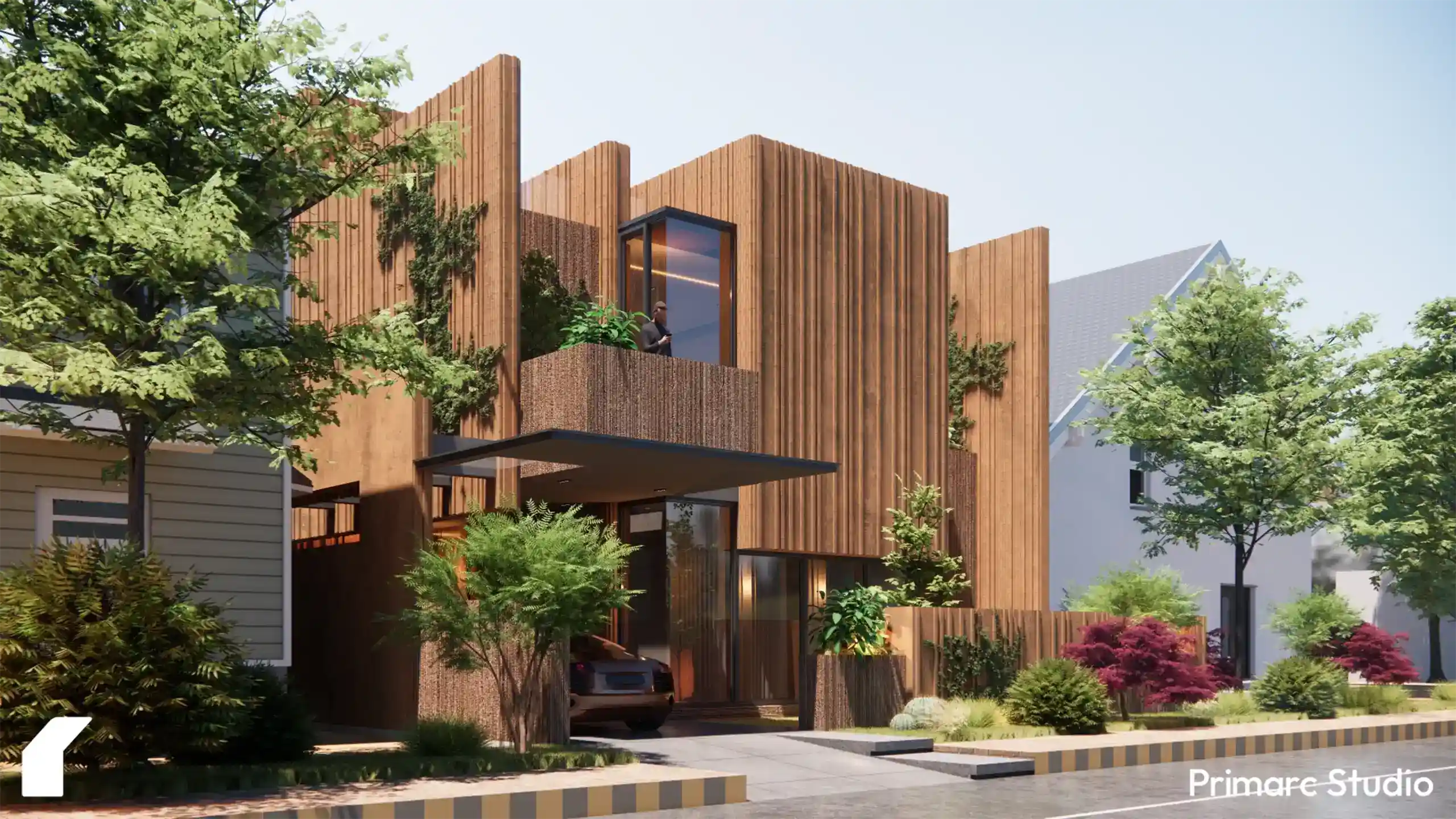
- The Southern Exposure: While the South receives the most sun, it is also the easiest to control. Because the summer sun is high, we use horizontal shading like deep cantilevers to block the heat while allowing the lower winter sun to enter and naturally warm the home.
- The Western Challenge: Western walls are the most problematic in Islamabad, as they soak up the low-angle evening sun during the hottest part of the day. We minimize window openings on western facades or use “buffer zones” like closets and bathrooms to protect the living areas.
Using Shades as a Design Language
Instead of relying on mechanical shutters or heavy curtains, we integrate shading into the building’s very form:
- Vertical & Horizontal Louvers: These act as “functional jewelry” for the house. By calculating the sun’s angle, we can design fins that block 90% of direct summer radiation while maintaining views of the outdoors.
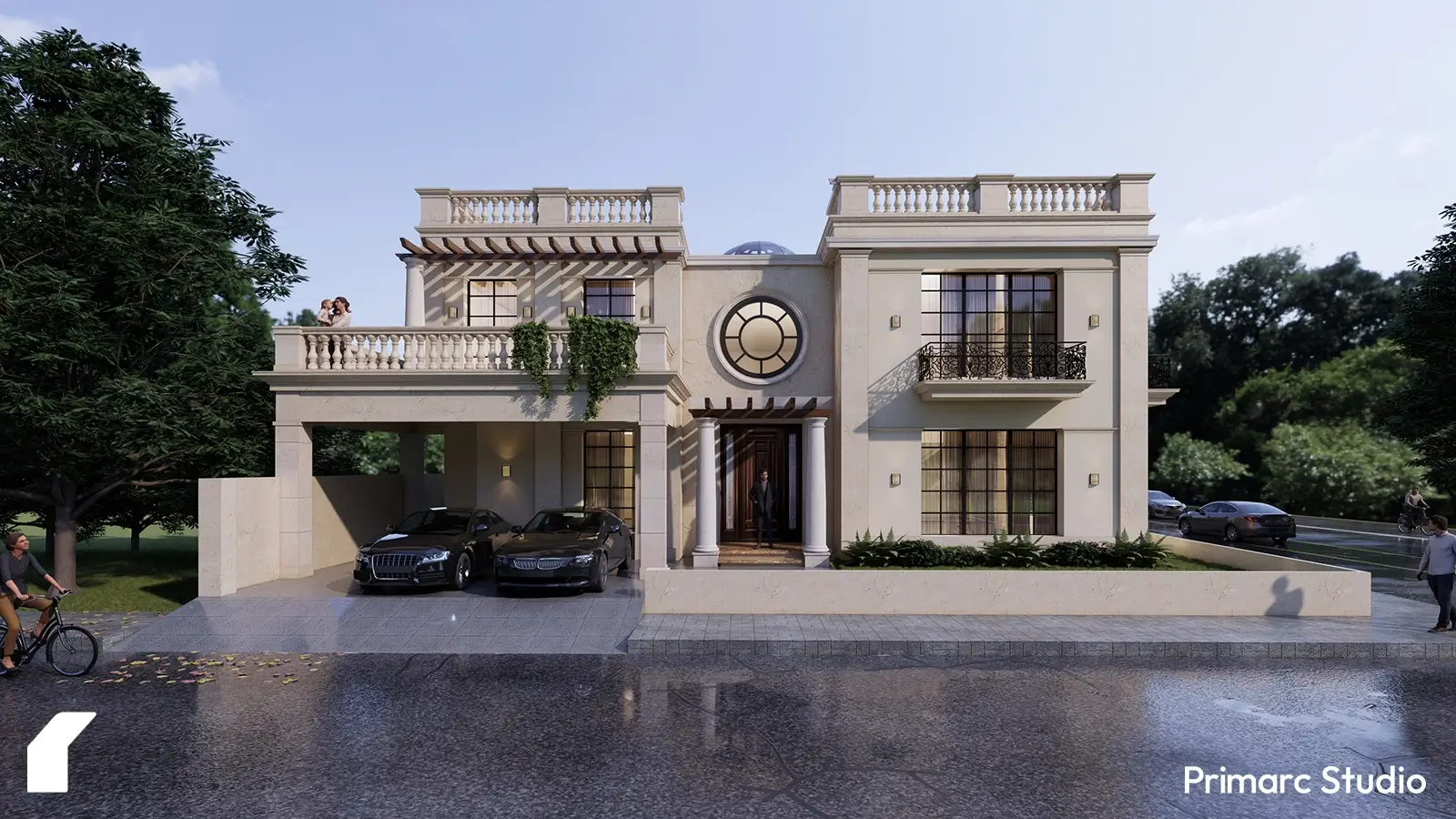
- Pergolas and Green Buffers: Integrating timber pergolas with deciduous vines provides a natural seasonal clock. In the summer, thick foliage provides 100% shade; in the winter, the leaves drop, allowing the sun to penetrate the glass and heat the interior floor slabs (Thermal Mass).
- Deep Overhangs (Chajjas): A modern take on the traditional chajja allows us to protect the building envelope from both the sun and the heavy Monsoon rains common in the Potohar region.
Living Shade: Trees and Strategic Landscaping
Soft landscaping acts as a natural microclimate regulator. Unlike concrete or steel, plants do not store and radiate heat; instead, they cool the air through evapotranspiration.
- Seasonal Solar Control: By planting deciduous trees (those that shed leaves in winter) on the South and West sides of a house, we create a seasonal “smart” shading system. In the summer, thick foliage blocks up to 80-90% of direct solar radiation. In the winter, the bare branches allow the lower sun to penetrate deep into the house, providing free natural heating.
- The Buffer Zone: We utilize tall, dense evergreens to create “windbreaks” or “dust buffers,” which are particularly useful during Islamabad’s dry pre-monsoon winds.
- Green Facades and Vertical Gardens: For smaller plots in sectors like B-17 or DHA, where space for large trees is limited, we integrate trellises and green walls. These living skins protect the building’s exterior walls from heating up, significantly reducing the “Urban Heat Island” effect locally.
- The Cooling Breeze: By placing water features or lush plants near windows, we can pre-cool the air before it enters the home via cross-ventilation, creating a “natural air conditioning” effect for the internal lounges.

The Fifth Elevation: Roof Performance
The roof is the most exposed part of any house in Islamabad, receiving direct vertical sunlight for over 10 hours a day in the summer.
- Inverted Roof Systems: We use layers of extruded polystyrene (XPS) insulation on top of the concrete slab, protected by a layer of screed or tiles. This ensures the concrete slab itself never heats up, keeping the rooms below naturally cool.
- Reflective Surfaces: Utilizing light-colored or “Cool Roof” tiles reflects a massive portion of solar radiation back into the atmosphere rather than absorbing it.
- Green Roofs: Where possible, we integrate rooftop gardens. The soil and vegetation act as a natural insulator, while the plants cool the air through evaporation, effectively turning the roof into a living cooling pad.

Localized Materiality
Using local materials isn’t just about sustainability; it’s about performance.
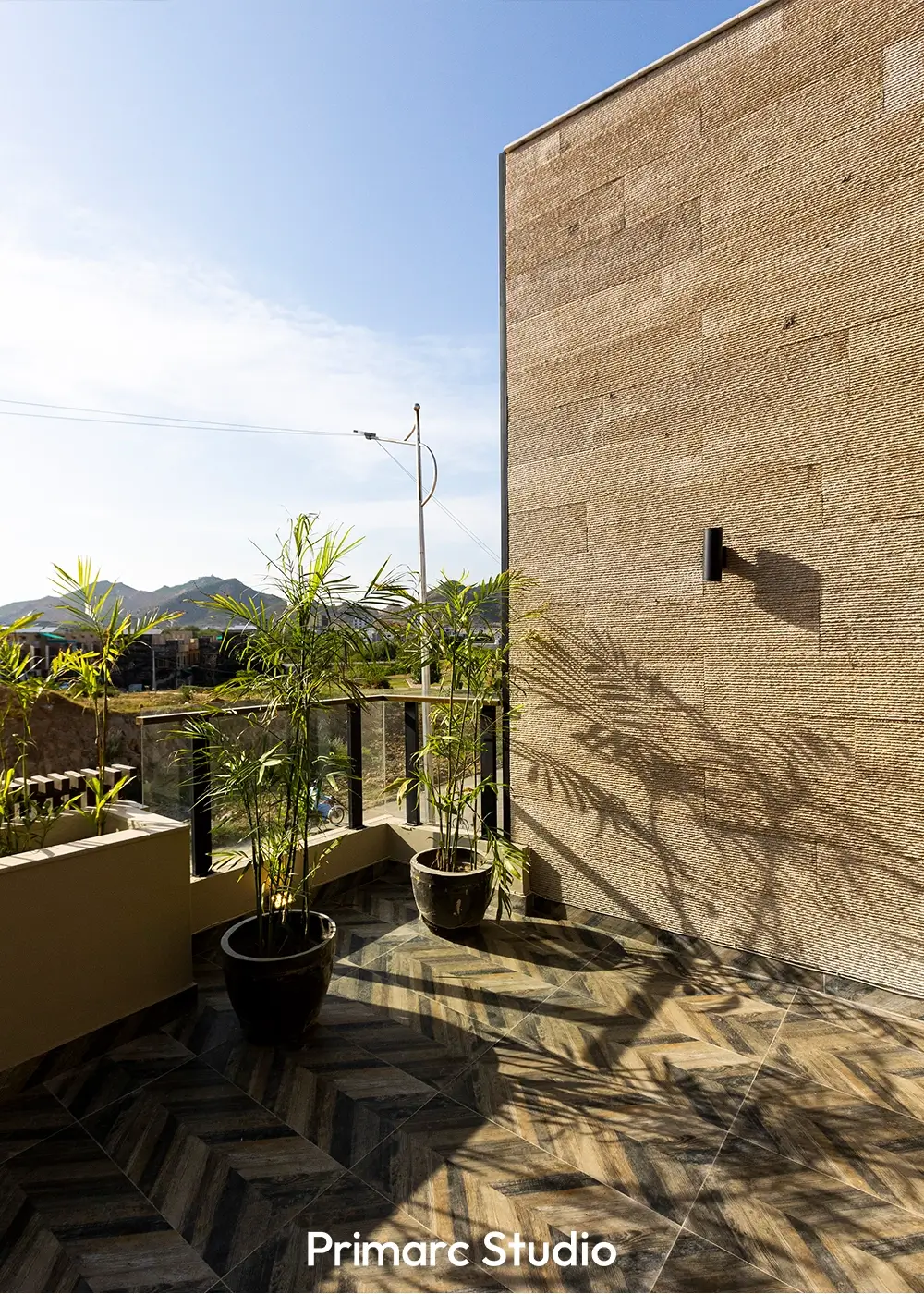
- Stone Cladding: We often use locally sourced stone from the surrounding hills as a decorative yet functional “rain-screen”. This provides an extra layer of shading for the main structure while requiring zero maintenance.
- Brick Masonry: The high thermal capacity of local red bricks remains a staple for Islamabad homes, provided they are used with modern cavity wall techniques.
Daylighting and Energy Efficiency
Natural light plays an important role in sustainable house design. Climate responsive homes maximize daylight while minimizing glare and heat gain. This is achieved through:
● Large windows facing north
● Skylights with shading
● Light-colored interior surfaces
● Reflective exterior materials
These techniques reduce the need for artificial lighting during the daytime. As a result, homes consume less electricity and provide a more comfortable living environment.
Water Resilience and Rainwater Harvesting
In Islamabad, the monsoon season isn’t just a weather event; it’s a massive untapped resource. With heavy rainfall typically occurring between July and September, climate-responsive architecture must transition from “heat defense” to “water management.”

Designing for the Monsoon
A well-designed home in Islamabad must handle high-intensity rainfall efficiently to prevent leakage and structural wear.
- Strategic Roof Slopes: We design roof pitches and drainage channels that can move large volumes of water quickly, preventing the “ponding” that often leads to dampness in standard concrete slabs.
- Integrated Collection Systems: Instead of letting rainwater run off into the street, we integrate collection pipes into the building’s structure. These lead to underground storage tanks or “recharge pits” that help replenish the local water table.
The Dual Benefit: Conservation and Cooling
Rainwater harvesting at Primarc Studio serves two primary purposes:
- Water Independence: Collected rainwater is ideal for landscaping, car washing, and other non-potable uses. This reduces the burden on Islamabad’s municipal water supply, which often faces shortages during the dry summer months.
- Thermal Regulation: By utilizing stored water in localized water features or rooftop ponds, we can enhance evaporation cooling around the house. This naturally lowers the temperature of the air entering the home during the humid transition periods.
Permeable Landscaping
Beyond the roof, the “hardscaping” around the house plays a role. We utilize permeable pavers and gravel-filled swales instead of solid concrete driveways. This allows the ground to “breathe” and absorb water, preventing localized flooding and ensuring that every drop of rain helps sustain the home’s greenery.

Primarc Studio Architects
The Primarc Studio editorial team consists of architects and designers specializing in modern residential projects, interior designs and commercial designs across Pakistan. Together, we share insights on design trends, construction costs, and project case studies.