CLIENT
Mr. Aammad Khan and Mr. Ghazi Marjan
Project Type
Residential
LOCATION
House 1774-1775, Street 74, Block-E, B-17, Islamabad
Covered Area
10,973 square feet approx.
Status
2025 - Ongoing
Tags
Architecture design - Interior design - Landscape design - Structure design - Electrical design - Plumbing design - Site Supervision
A Masterclass in Inclusive Neoclassical Design
At Primarc Studio, we believe that architecture is the art of solving complex human problems through the lens of aesthetic beauty. Ghazi House, located in the prestigious B-17 sector of Islamabad, represents our most significant commitment to this philosophy.
This project began with a profound client vision: a home that would serve as a grand, timeless testament to classical architecture while providing a completely barrier-free sanctuary for their family. Designing a space that is both visually monumental and functionally inclusive was a challenge we embraced with precision. We set out to prove that accessibility when integrated at the design stage does not have to be a medical necessity; it can be an invisible, seamless part of a luxurious lifestyle.
Working within the B-17 layout, we encountered a unique opportunity: two adjacent plots, joined front-to-back. Our master plan utilized this scale to create a multi-layered living experience.
– The Foundation of Space: We engineered a massive, subterranean basement that spans the footprint of both plots, providing expansive zones for parking, service, and recreation.
– Vertical Restraint: To maintain the ideal Neoclassical proportions for the ground and first floors, we concentrated the primary living volumes on the first plot. This intentional restraint prevents the house from appearing “over-built,” allowing the classical facade to breathe and hold its intended regal posture.
The Neoclassical Facade: Defining Presence
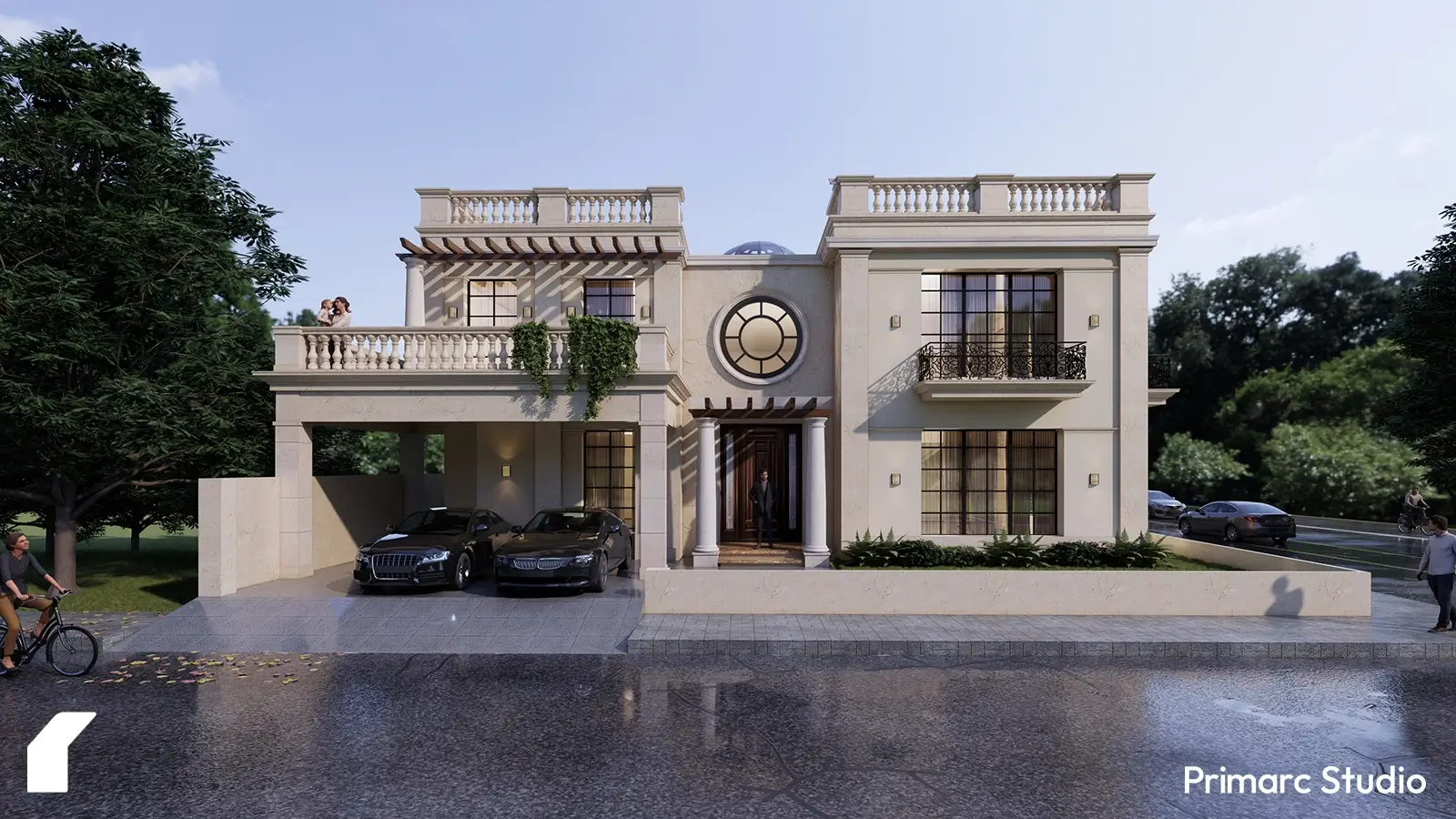
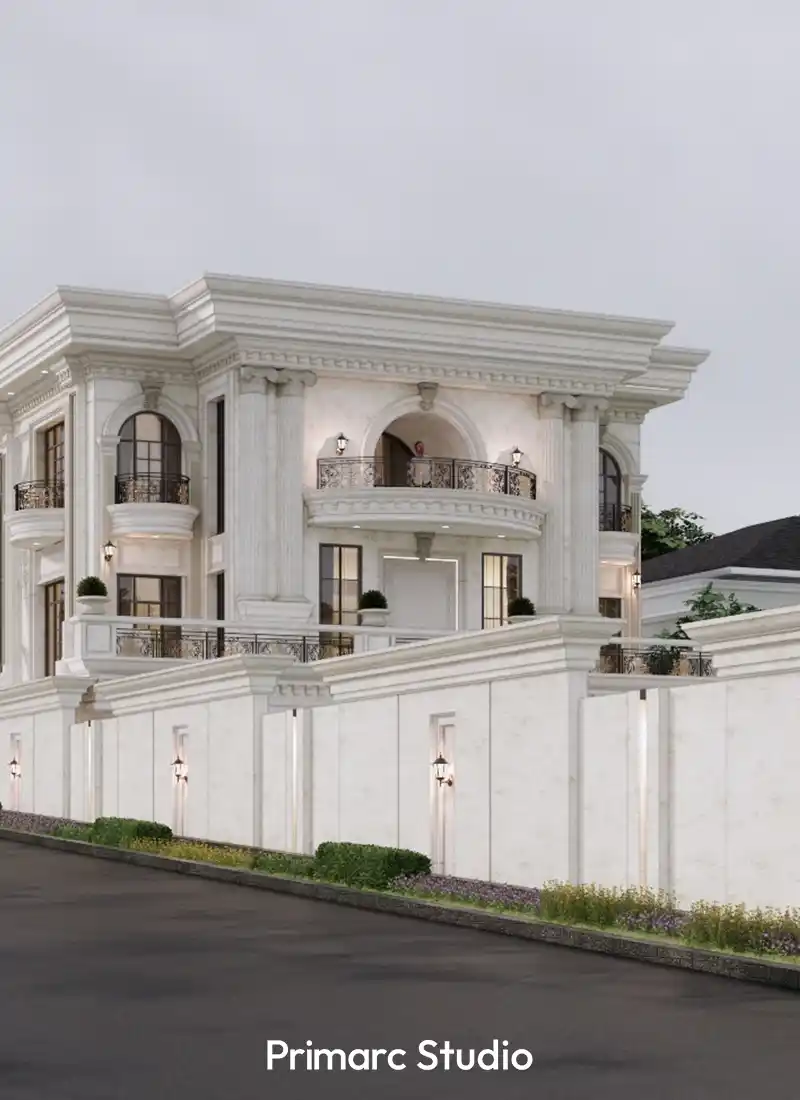
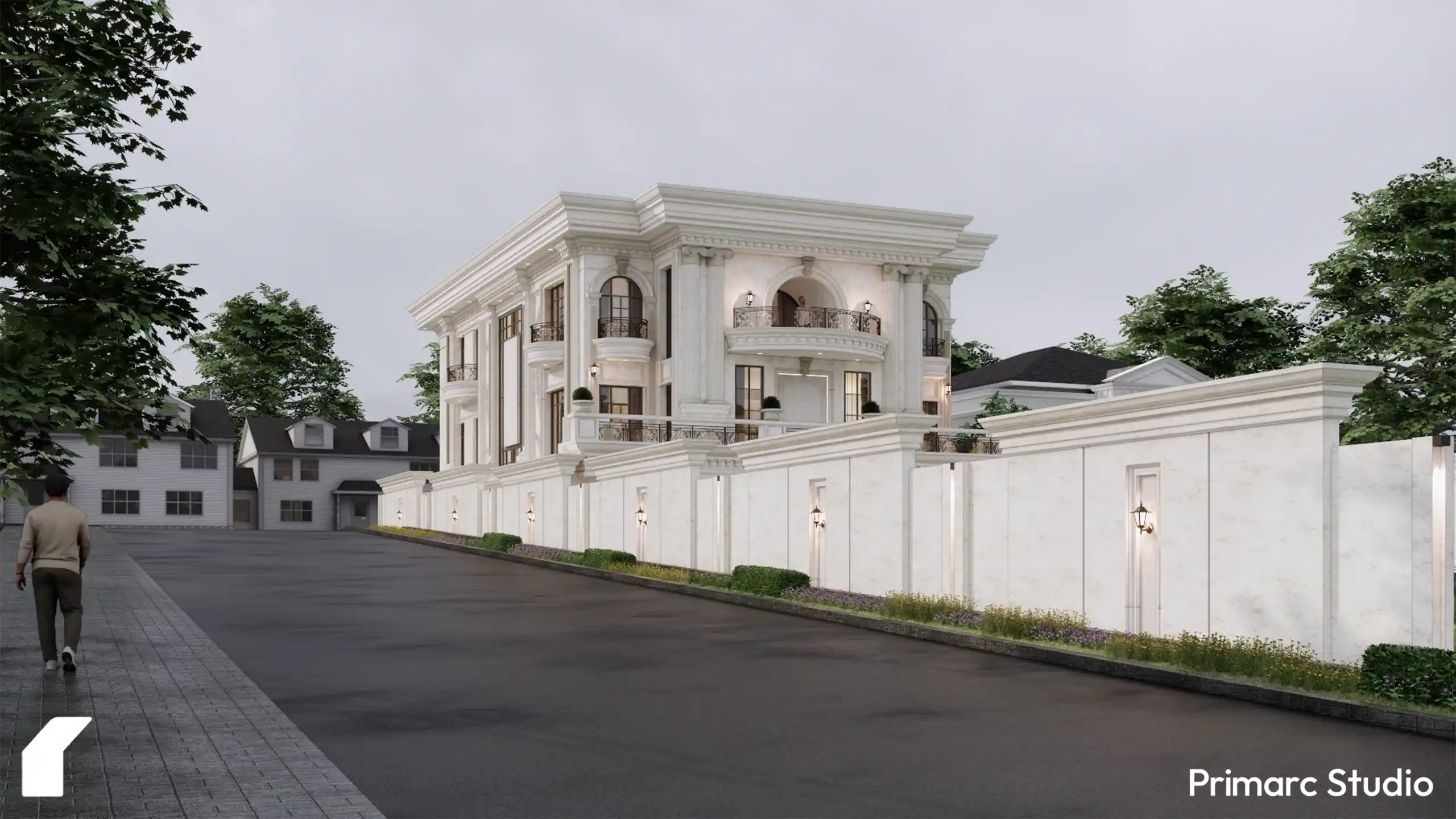
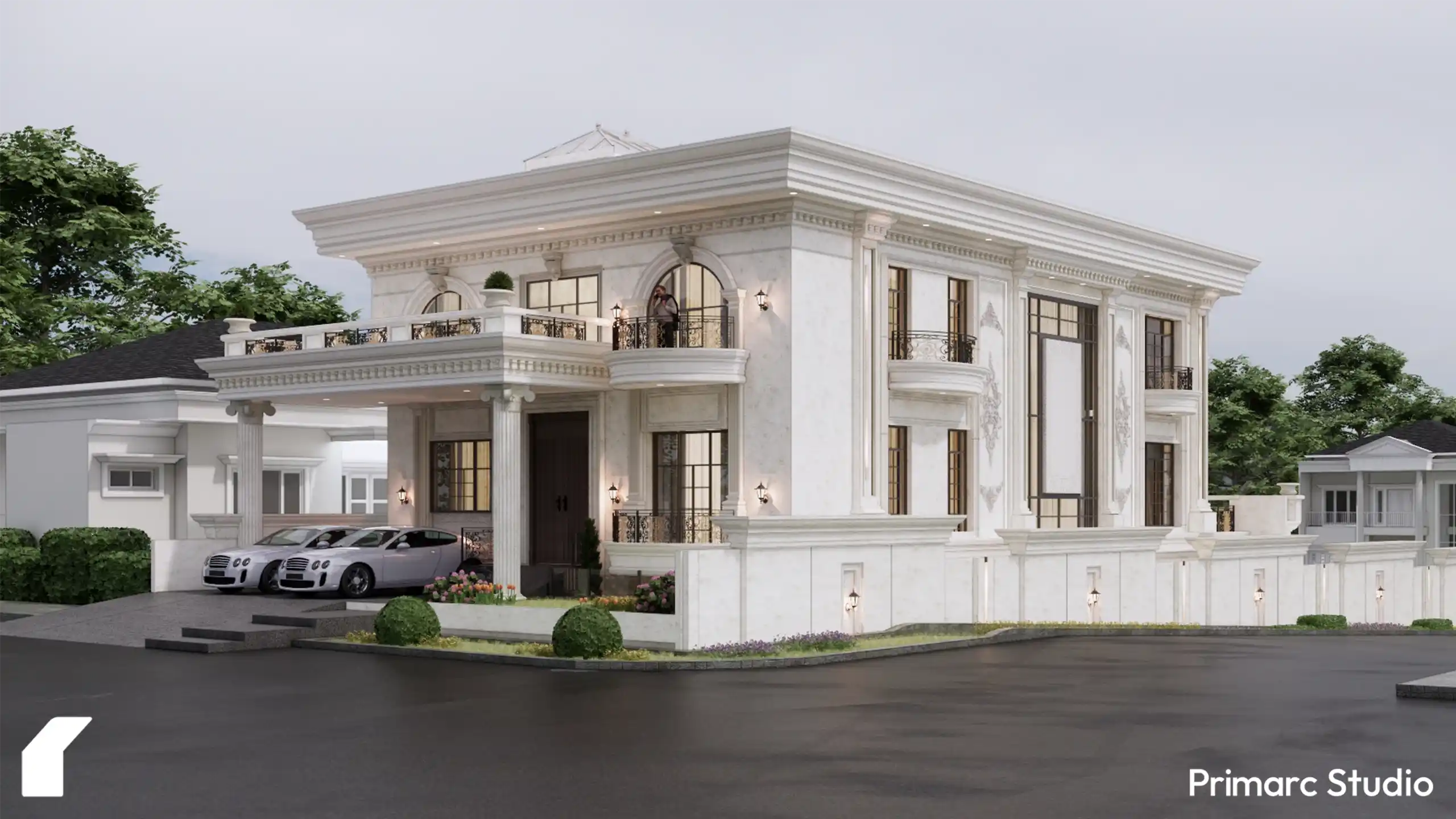
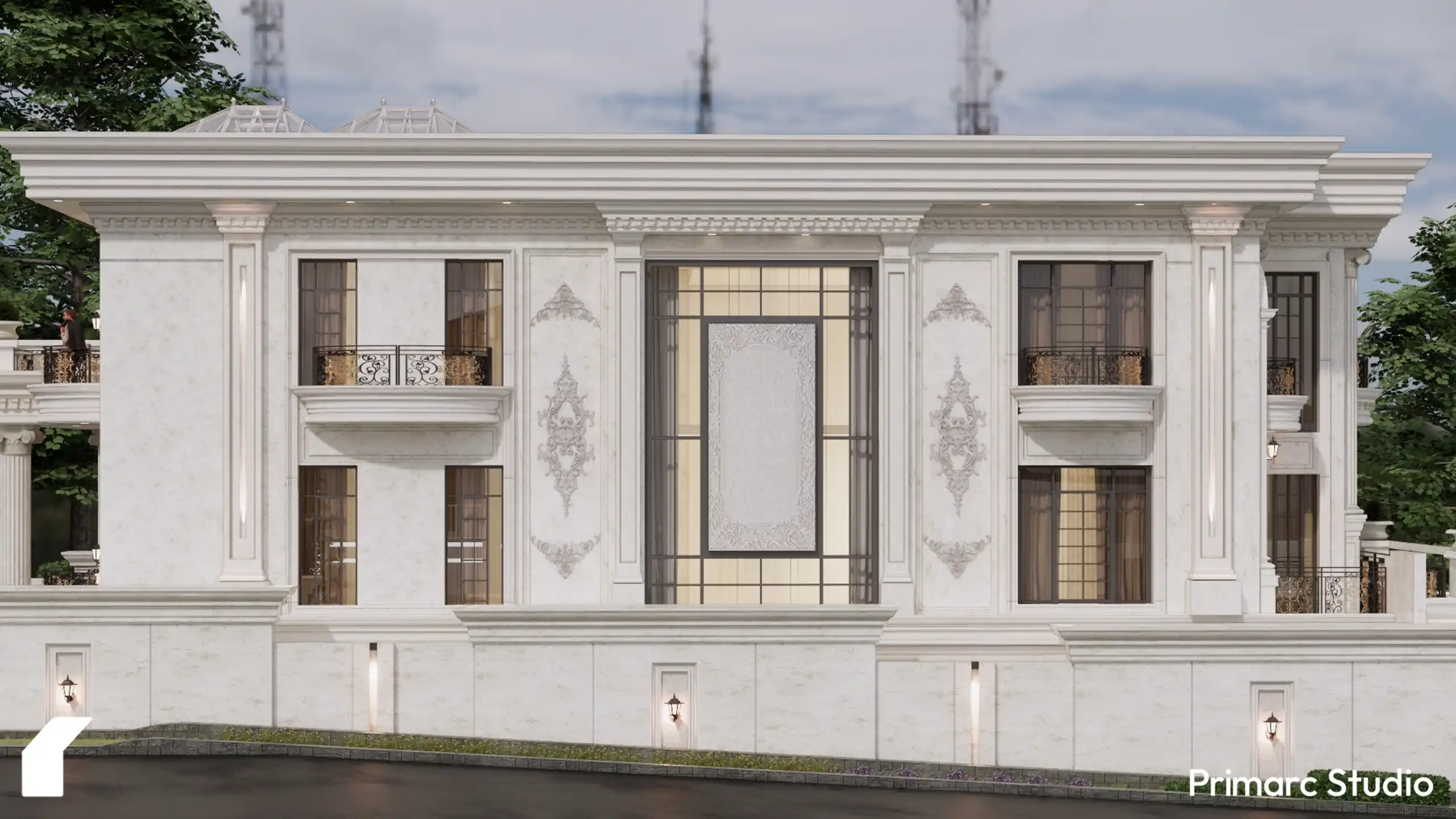
The exterior of Ghazi House stands as a definitive homage to timeless European Palladian architecture, executed with modern technical rigor to create a commanding presence in B-17 Islamabad. The facade is defined by dramatic Ionic columns and intricate GFRC (Glass Fiber Reinforced Concrete) relief patterns designed to catch the Islamabad sun, casting deep shadows that highlight the home’s meticulous craftsmanship. This symbolic ornamentation provides a sense of permanent prestige, ensuring the villa remains an architectural landmark within its neighborhood.
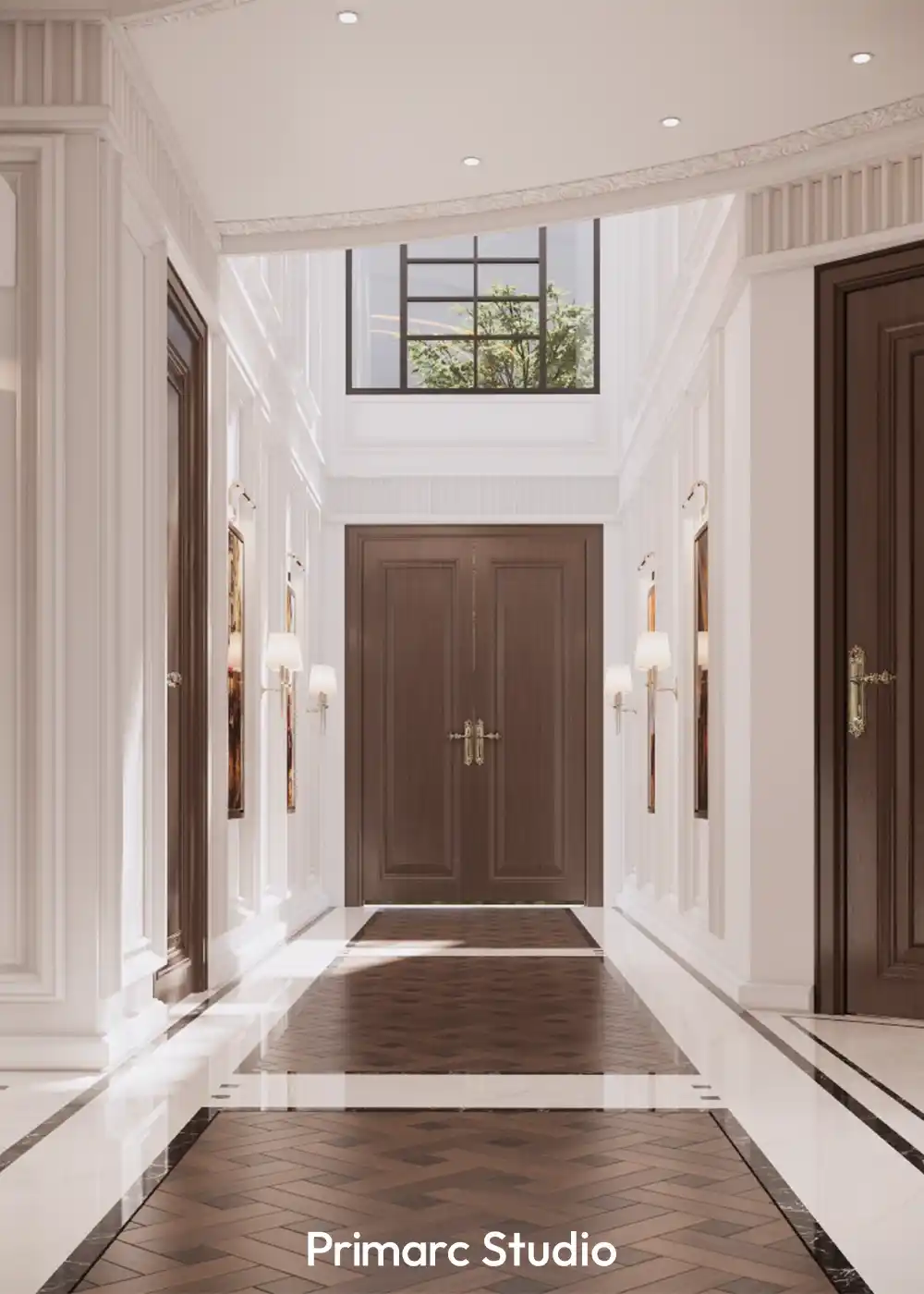
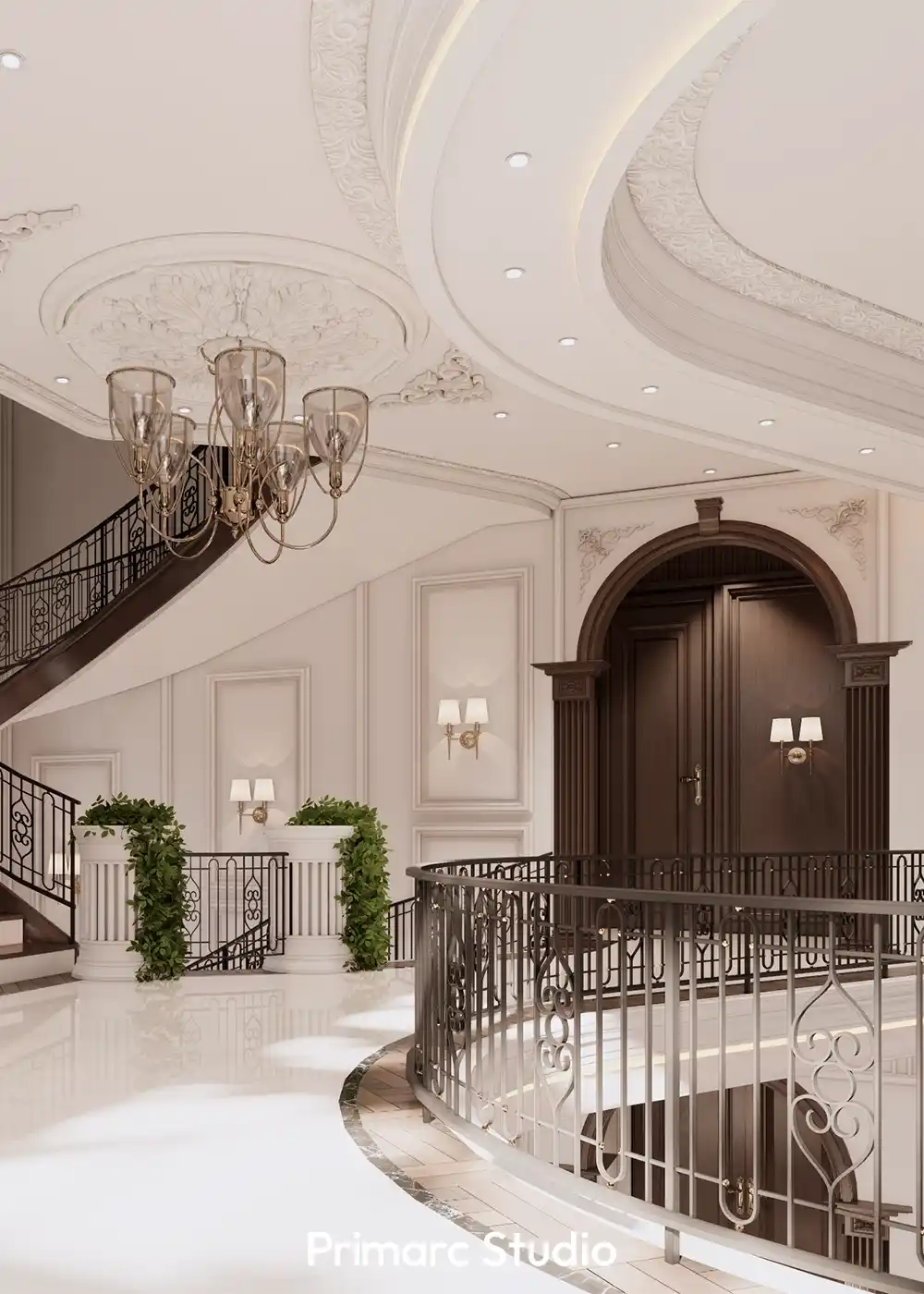
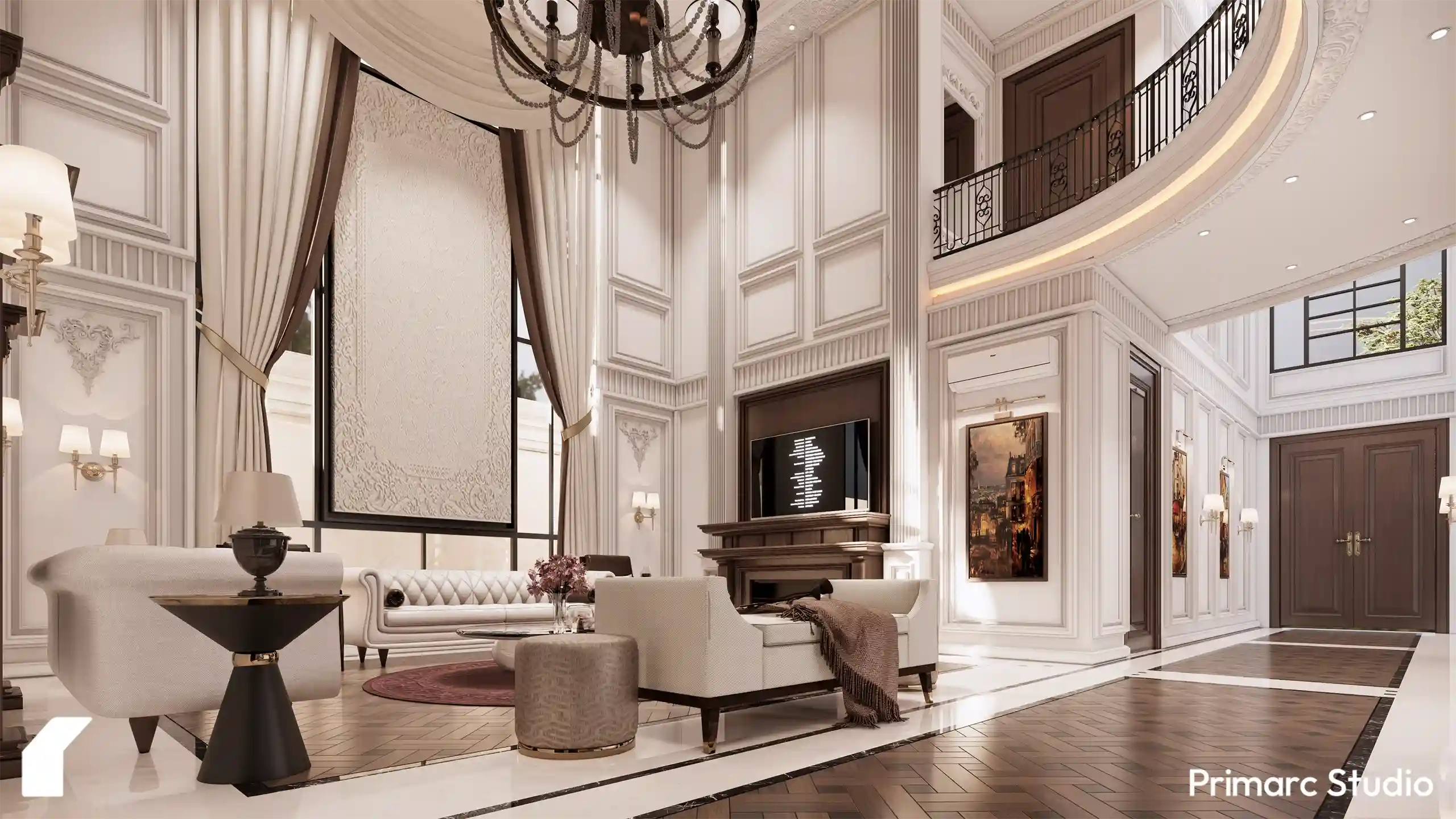
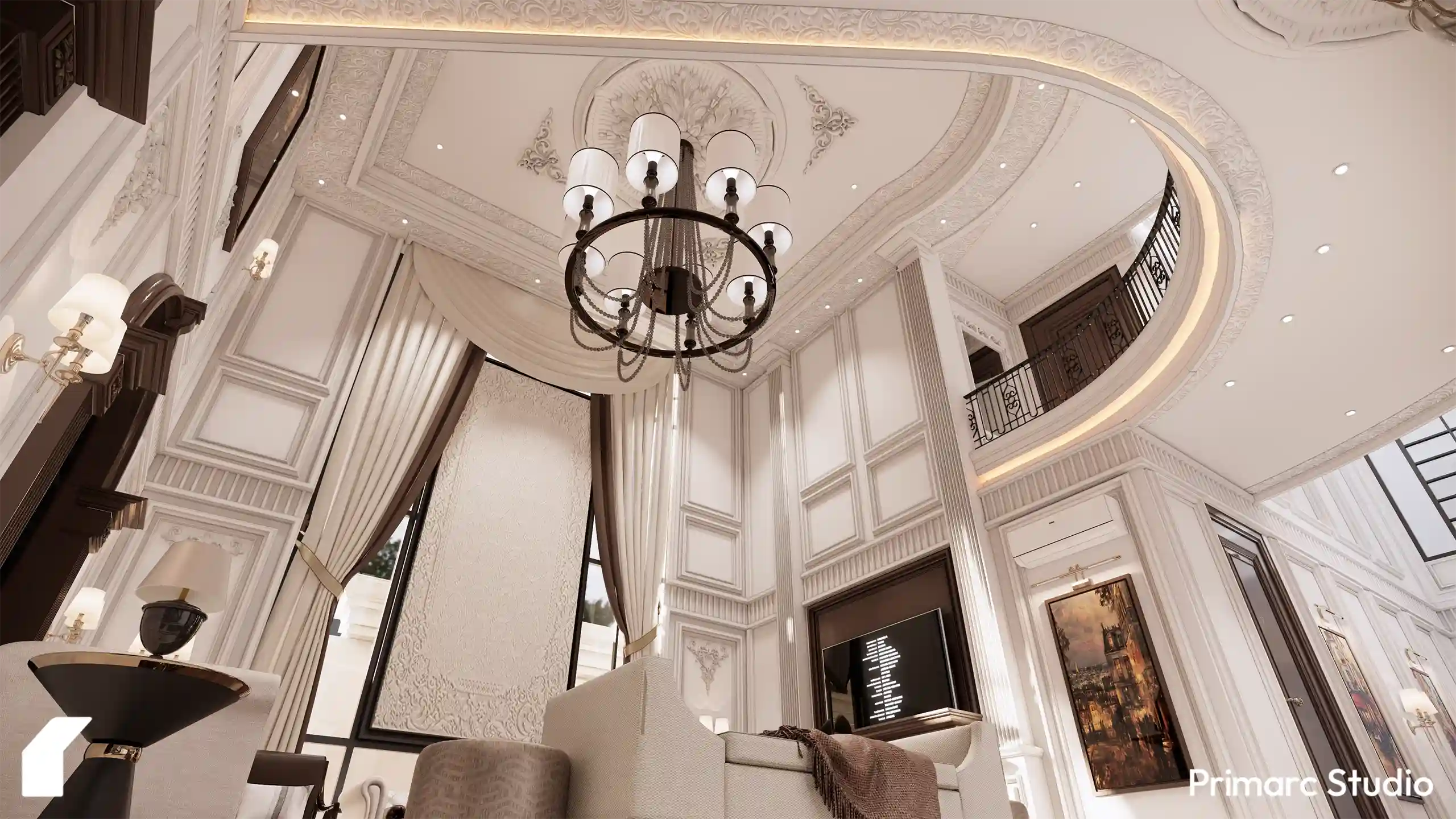
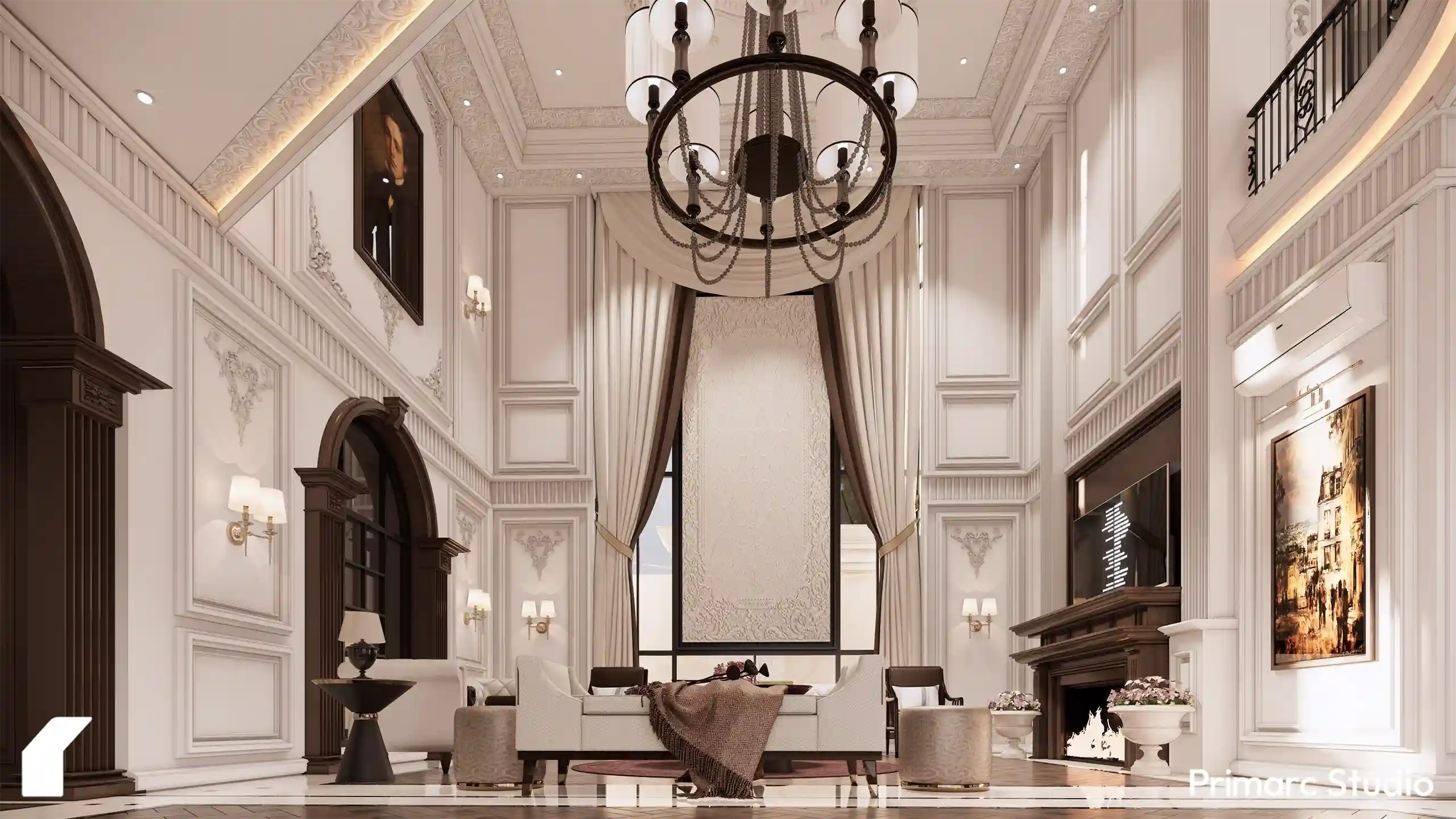
A critical element of our design was the seamless integration of accessibility into the main entrance. Rather than treating functional needs as an afterthought, we engineered an “invisible” ramp, a low-slope entry path integrated directly into the classical porch architecture. This deliberate choice ensures that the transition from the street to the foyer is majestic rather than utilitarian, allowing every visitor and family member to experience the same grand sense of arrival without the visual disruption of a detached or clinical ramp system. The interior design of Ghazi House is defined by a “lush and luxurious” theme that prioritizes warmth over the sterile coldness often found in large-scale classical residences. By introducing extensive wood and veneer finishes throughout the living spaces, we created a sophisticated palette that feels both grand and inviting. This is immediately evident in the grand circulation area, where the foyer opens into a soaring double-height space. This central volume is crowned by a custom gypsum coffered ceiling and a cascading crystal chandelier, establishing a sense of palatial scale from the moment of entry.
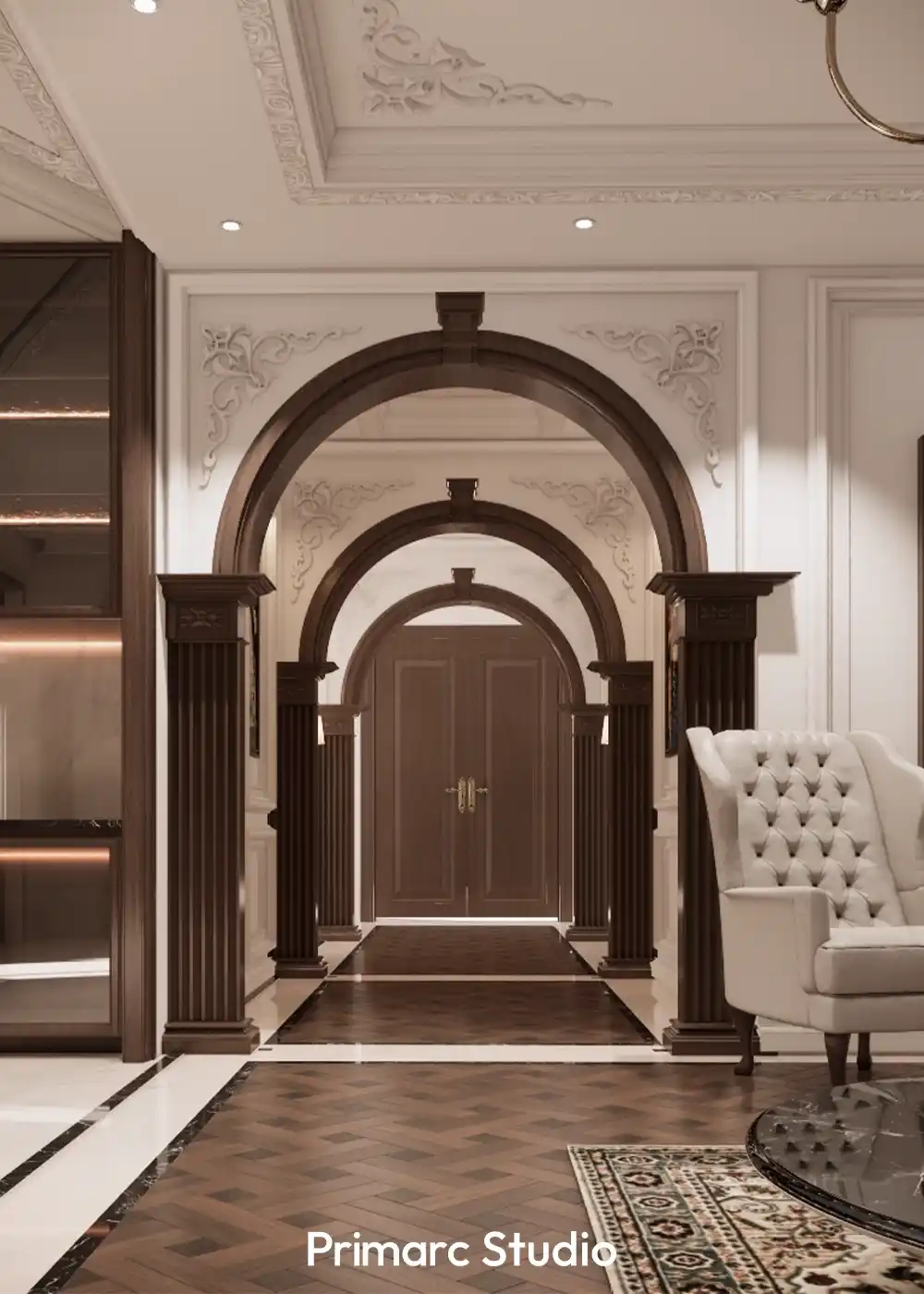
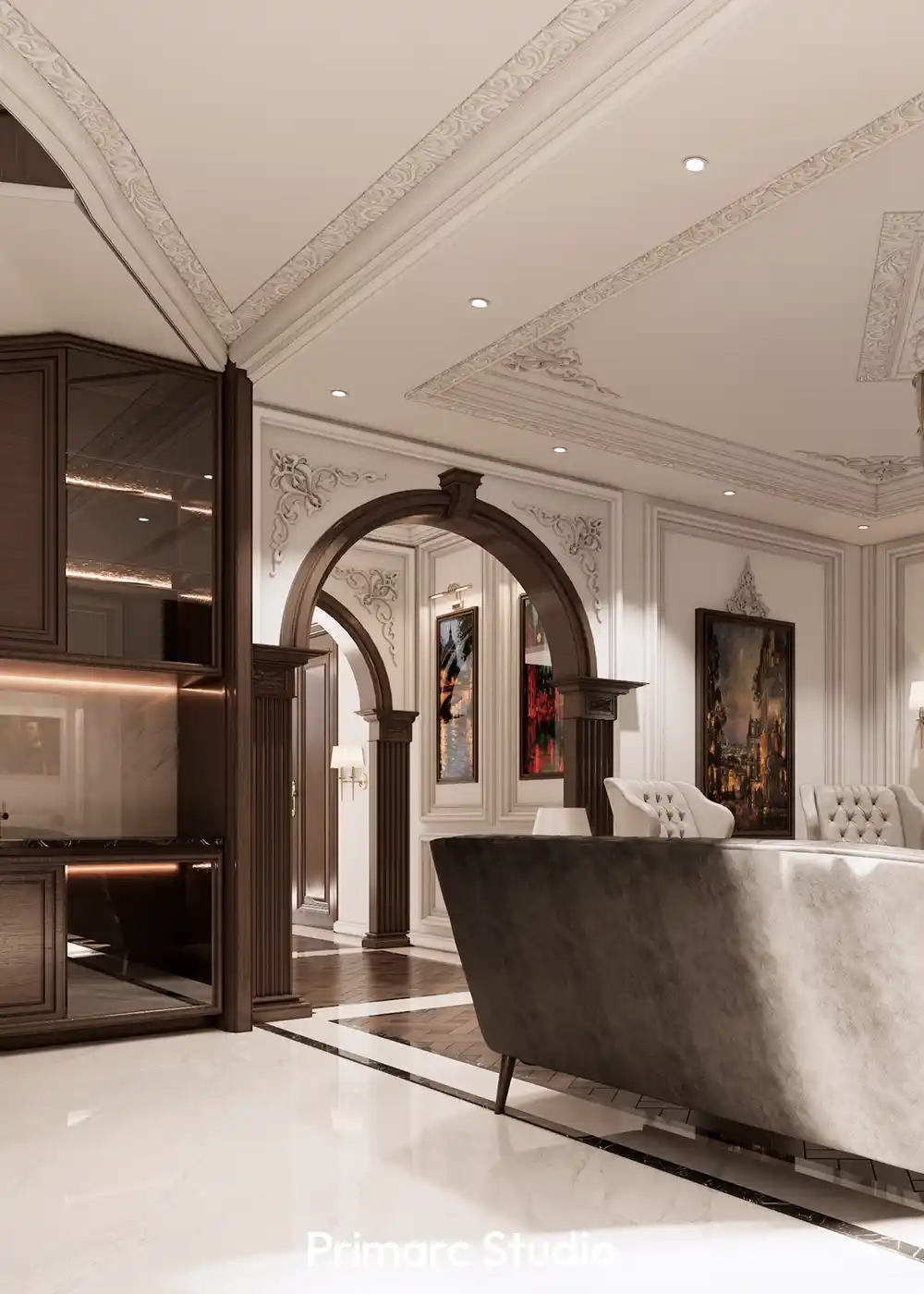
A signature architectural element of this project is the “Gallery of Archways,” a series of successive classical arches crafted from rich dark walnut wood. While these serve as a powerful visual anchor for the interior, they are also a critical component of the home’s universal design. With a clear-width of 4 feet, these archways provide the generous clearance required for effortless wheelchair maneuverability, ensuring that the child’s movement is never restricted by the home’s ornamentation. This tactile luxury extends to the walls, which are treated with bespoke boiserie paneling, and the floors, featuring premium Italian marble with intricate borders. To maintain a zero-trip environment, every transition between rooms and materials has been engineered to be perfectly flush.
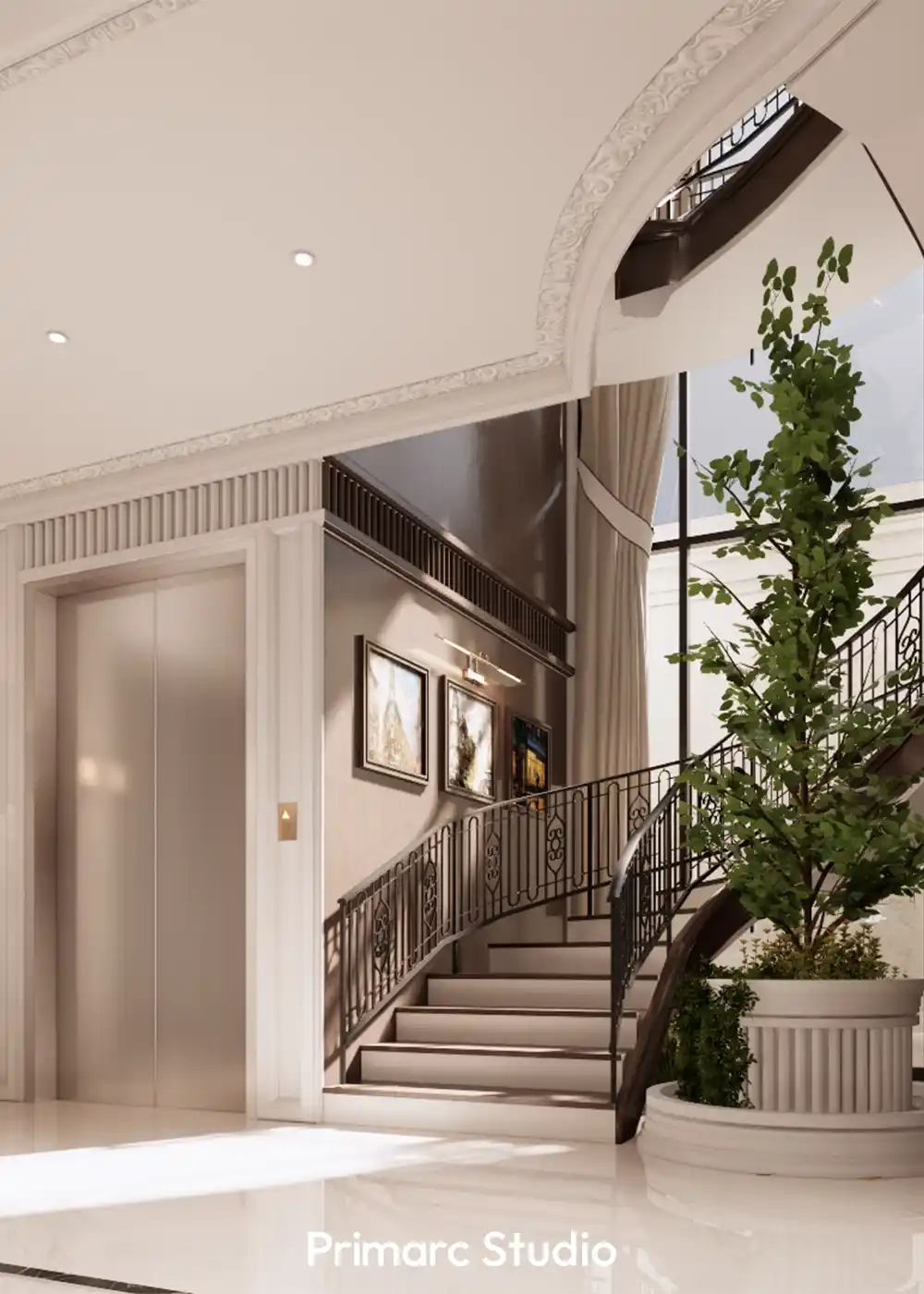
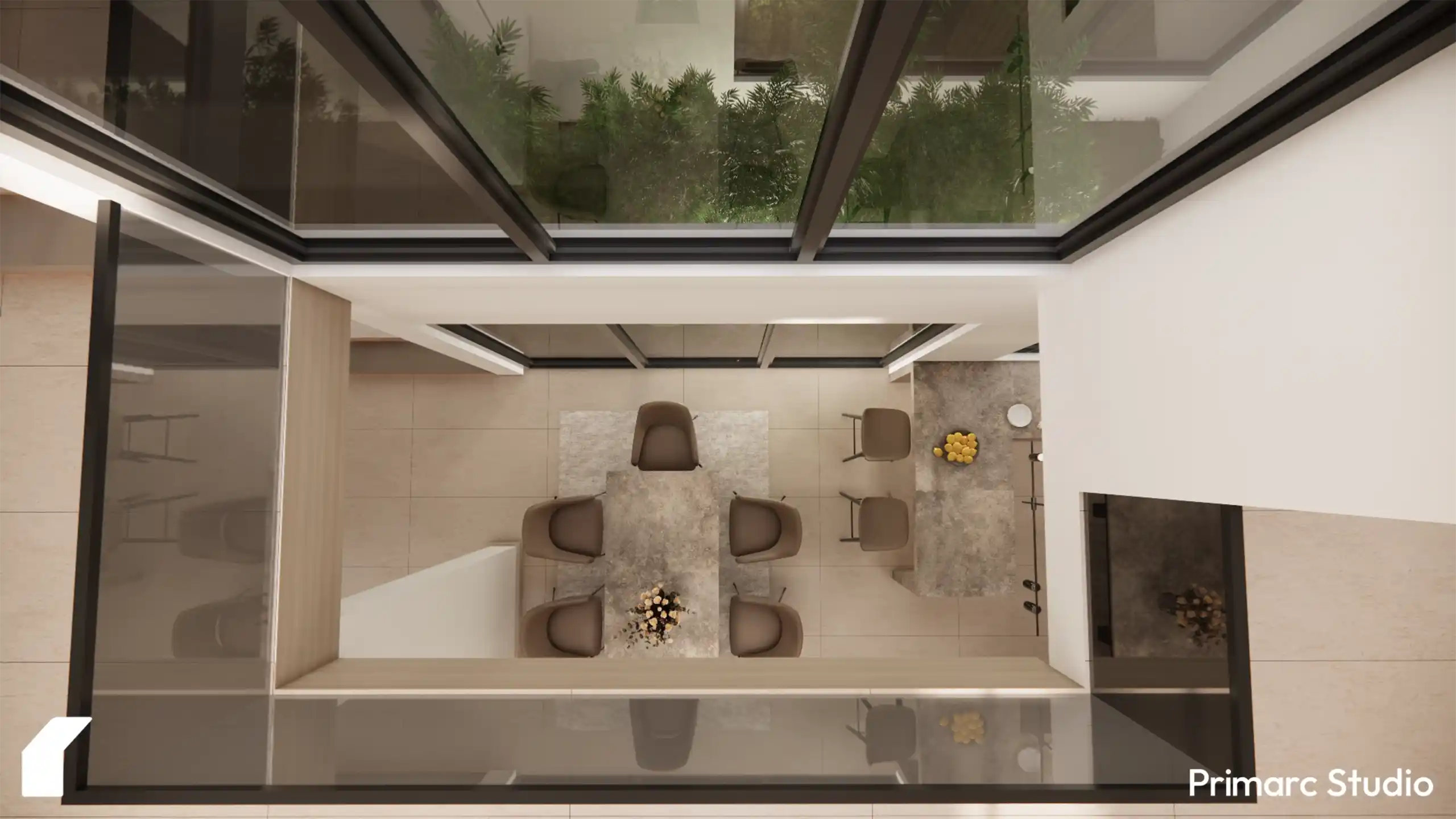
To unify the three levels of the villa, the expansive basement, the ground floor, and the private first-floor quarters, we prioritized effortless vertical mobility as a core design pillar. Rather than tucking the elevator into a service corner, we installed a state-of-the-art traction home elevator as a central feature of the circulation core. The elevator cabin is finished in the same rich wood tones as the surrounding interior, allowing it to blend seamlessly into the classical aesthetic. This strategic placement ensures continuous access, providing every family member with equal and dignified entry to the subterranean entertainment areas and the grand living suites at all times.